

The variety of Röben brick slips
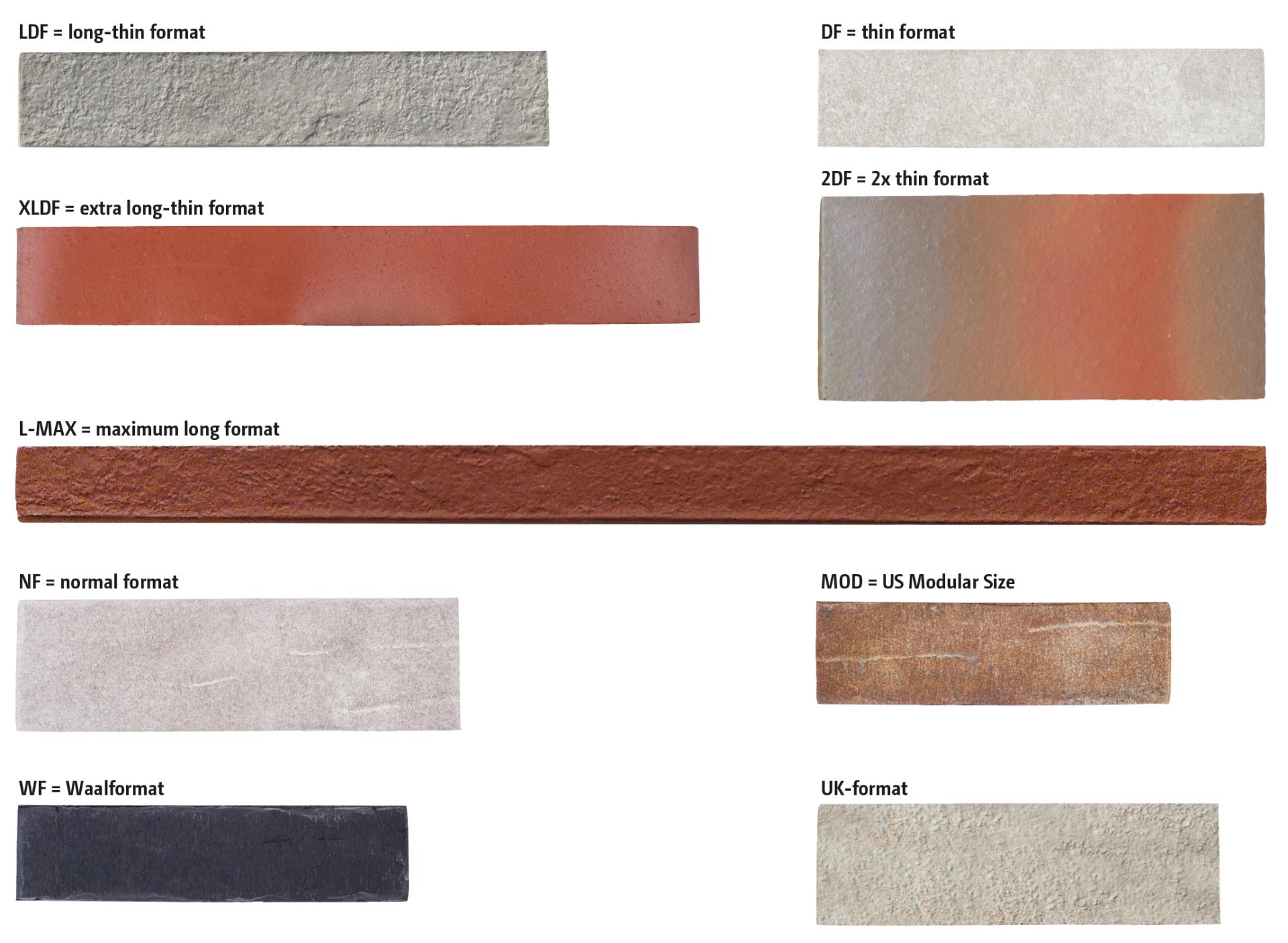
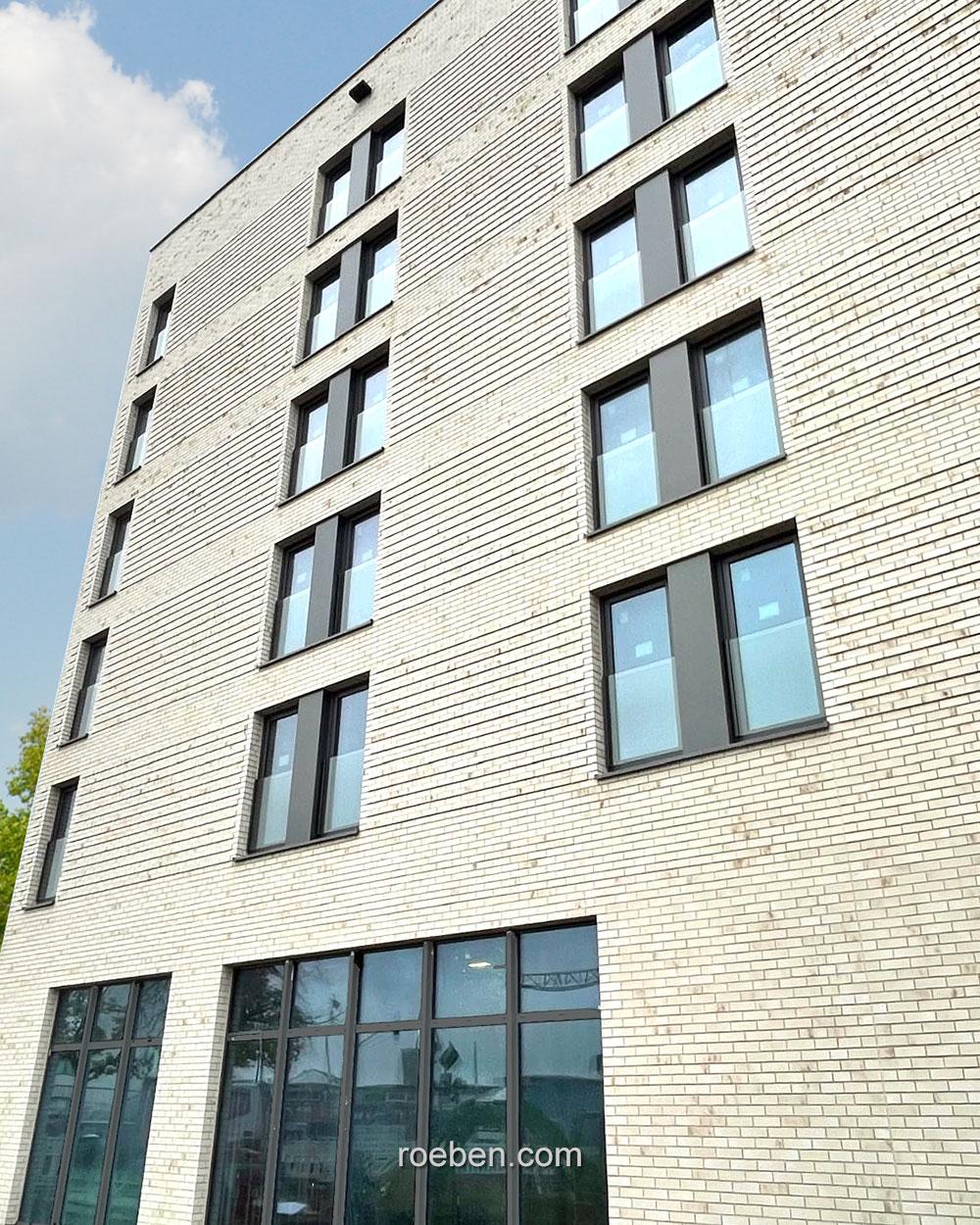
Röben brick slips are available in a wide variety of sizes, textures, colors, thicknesses, and corner angles. This offers virtually endless possibilities for designing ETICS and facades using real bricks. Matching corner pieces are available for all brick slips - not just for 90° corners. These facades remain beautiful over time and are virtually maintenance-free - making them sustainable in every respect. Here is our overview.


Formats and thicknesses
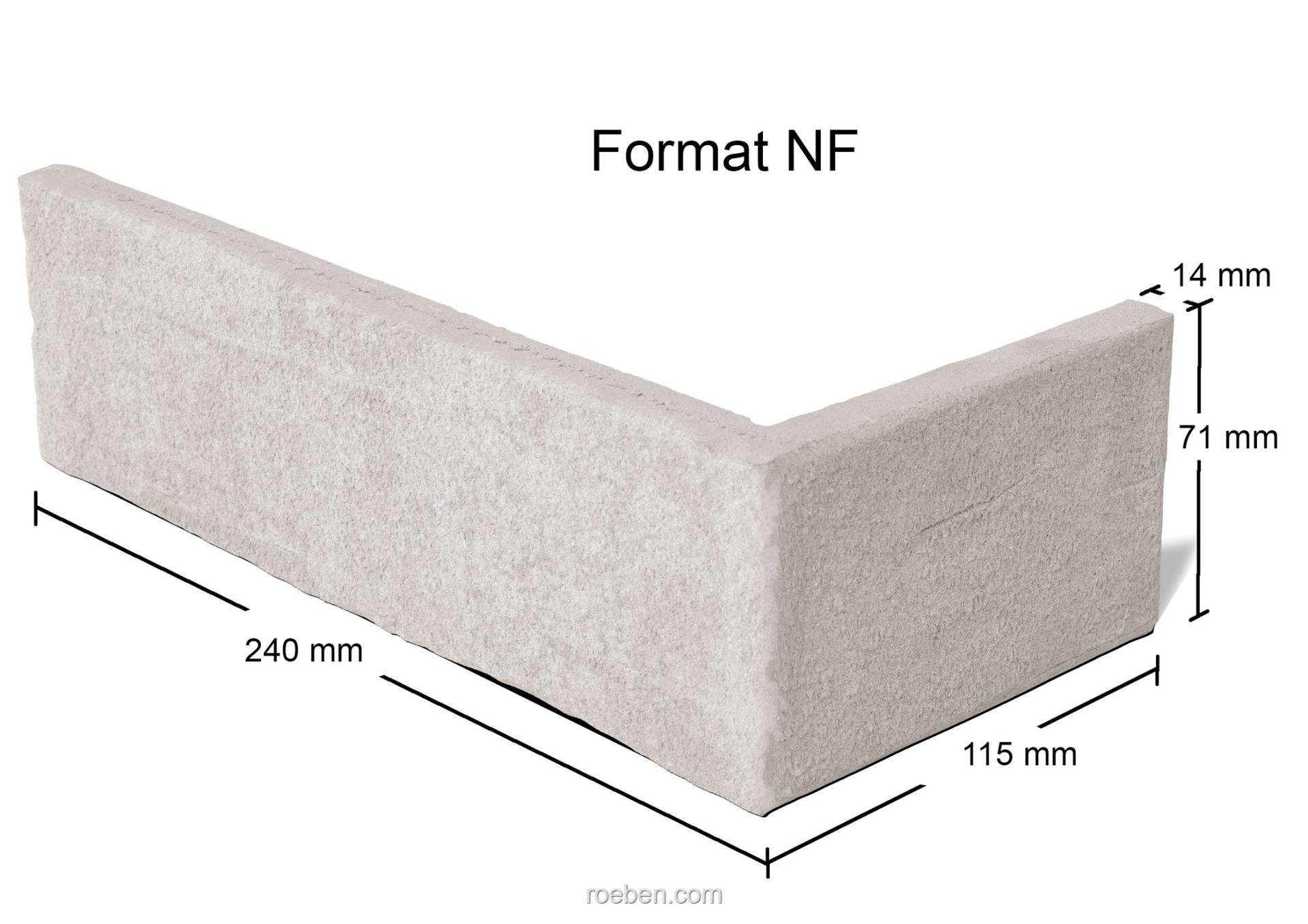
Röben offers brick slips in many international formats, including UK-size and others. The standard thicknesses are 14, 18, and 25 mm.
However, almost any thickness can be manufactured upon request. This makes it possible to create textured brickwork with uniform insulation thickness without any special effort.

Looking around corners
Corner bricks slips are available to match all brick slips. Wherever possible, Röben produces its corner brick slips by cutting them from full-sized bricks. This ensures that a right angle is truly a right angle! Custom corner brick slips can also be manufactured for angles other than 90°. As a result, brick slip masonry is visually indistinguishable from conventional masonry.
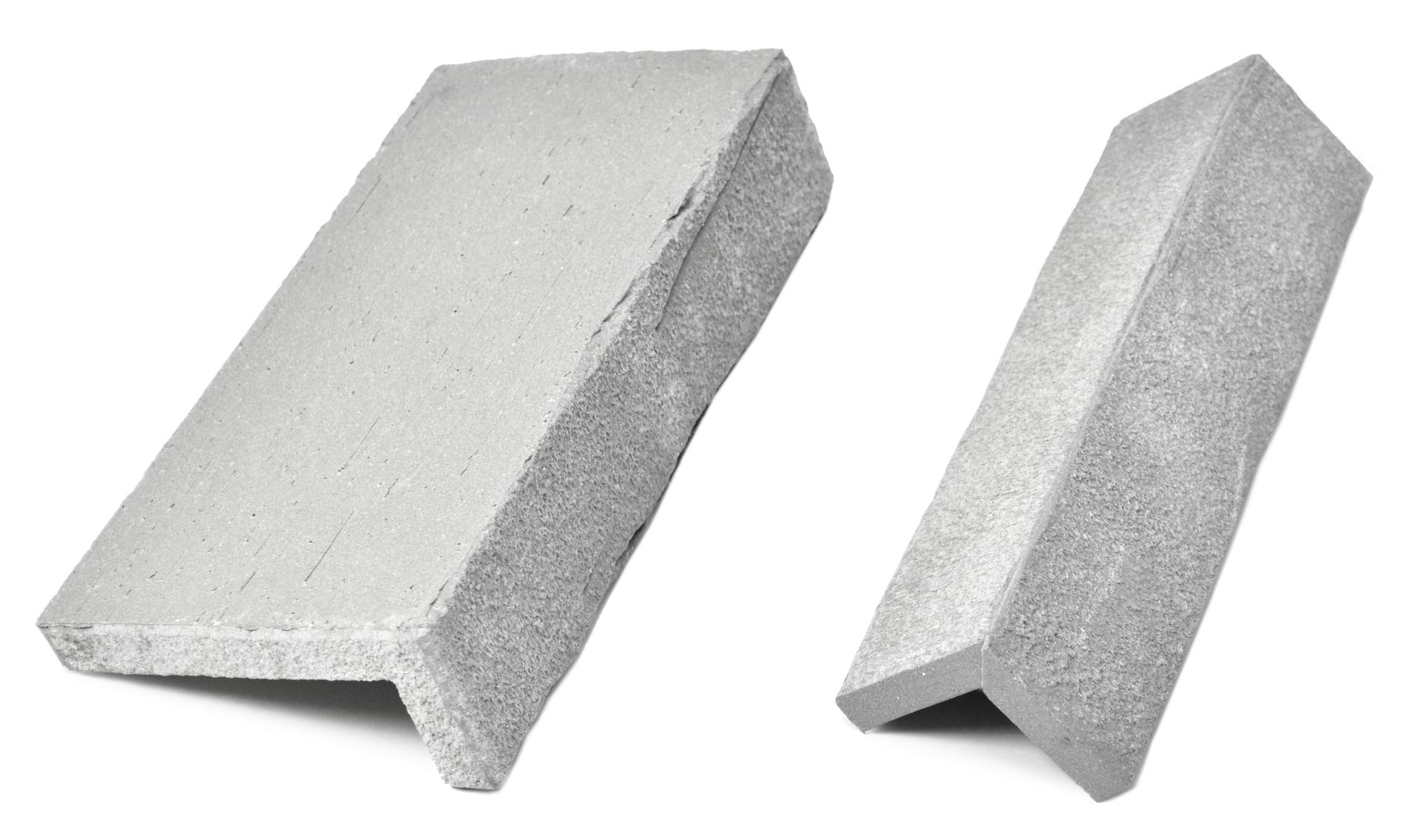
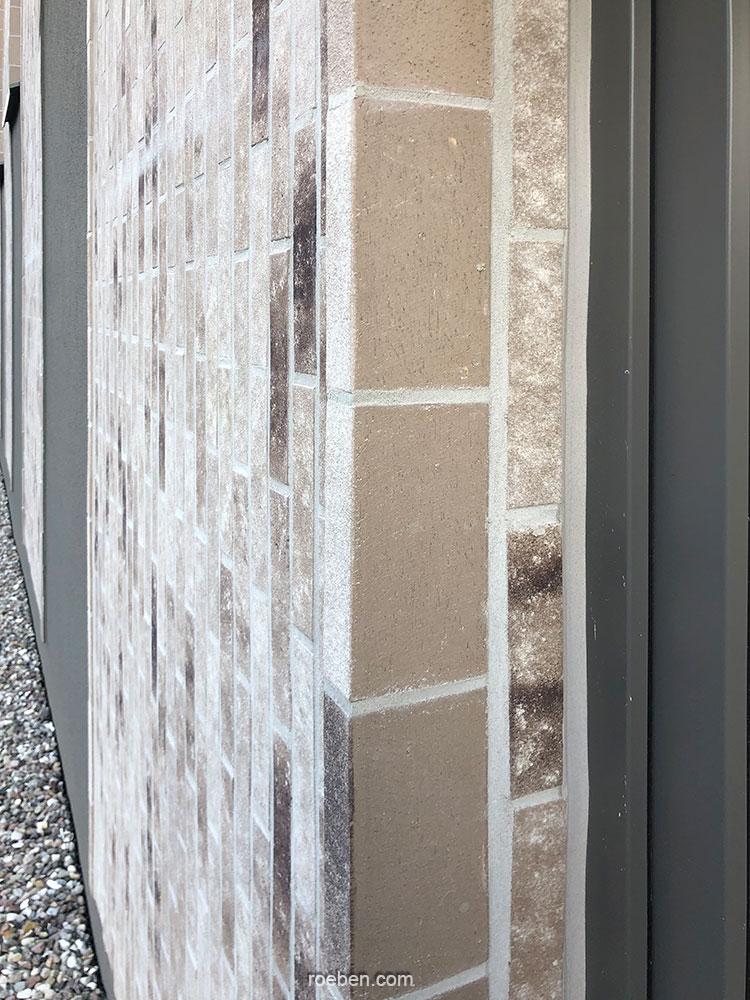
Visually, it looks like a single brick: a 14 mm angle brick installed on its edge with a beveled underside. The brick slip was cut in one piece from a single stone!
CALAIS carbon

The surfaces
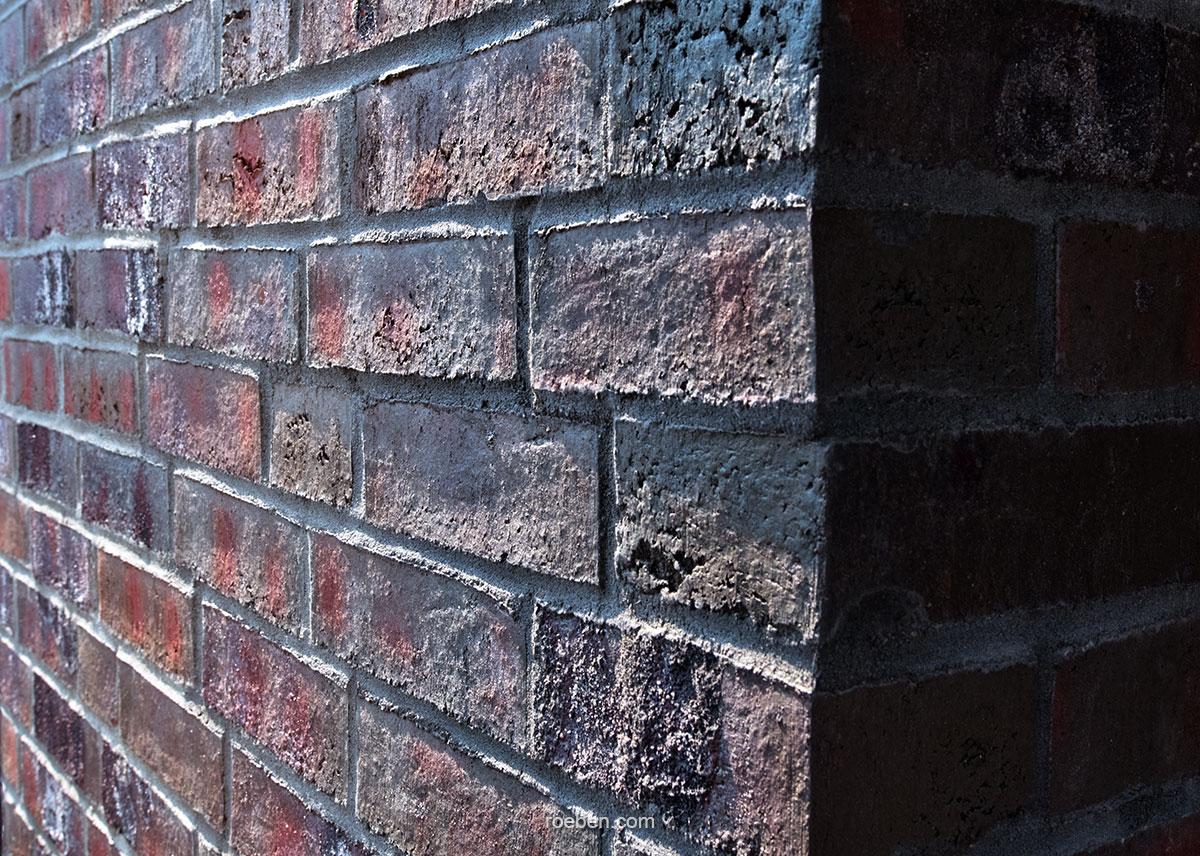
A brick facade is always a dynamic facade! Its intricate composition creates a play of light and shadow across the surface. As you approach the facade, the color and texture of each individual brick ultimately give the masonry a further, delicate dimension. The photo shows the water struck surface of WIESMOOR kohle-bunt.
The basic surface types listed here merely form the foundation upon which further refinements are always possible in the BRICK-DESIGN® process.
Smooth surfaces
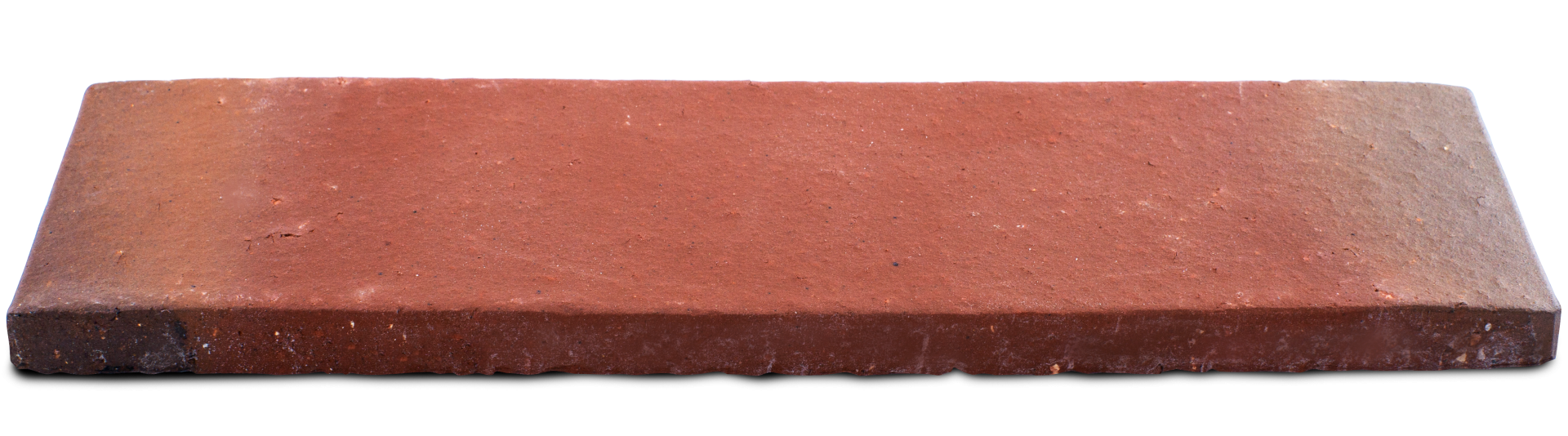
Röben uses special clays to fire its classic clinker and ceramic clinker brick slips. The color palette offers an endless variety of shades, ranging from white to black, with countless shades of gray, red, blue, yellow, and earthy tones in between. These brick slips are characterized by their low water absorption and the clear, ringing sound produced when two of them are tapped lightly together.
Brick surfaces
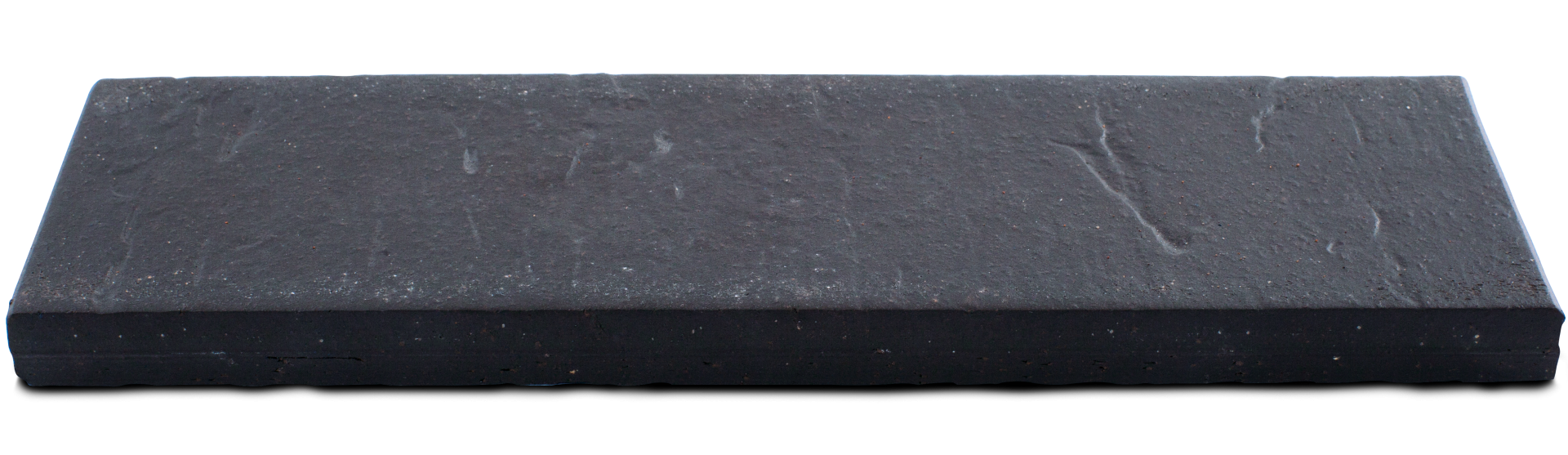
Many of the surfaces of our brick slips feature a fine brick texture. This allows us to combine extremely low water absorption with a subtly rustic appearance in a single product.
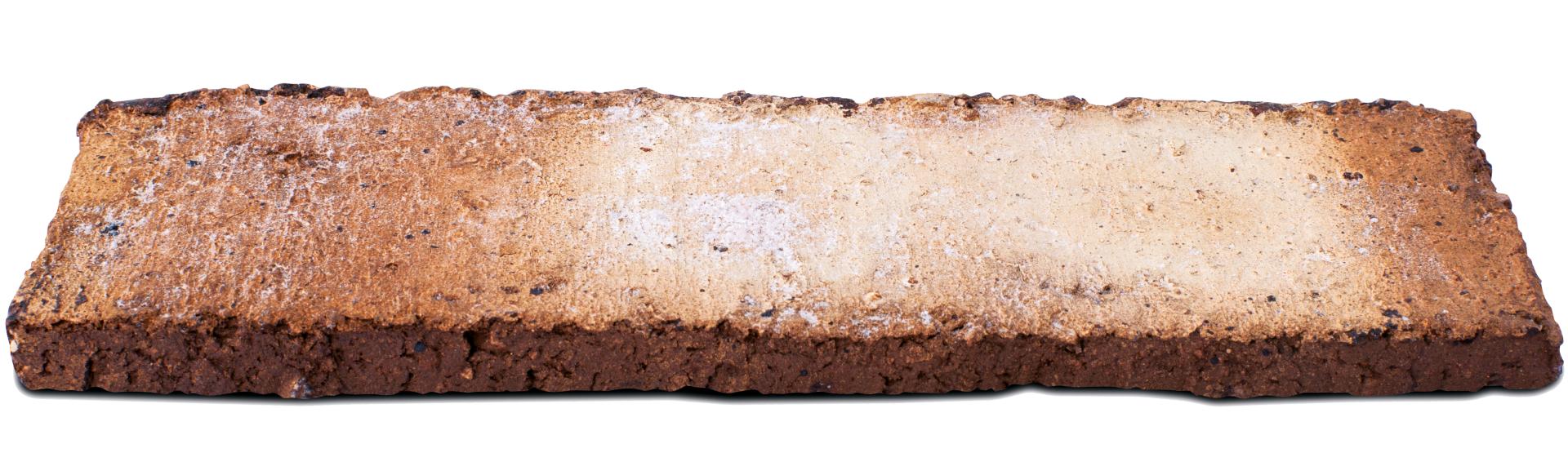
Waterstruck finishes
To produce these brick slips, the unusually wet lump of clay is pressed through a frame. This creates the distinctive, ribbed surfaces of the WIESMOOR series, featuring a subtle, jagged edge. The surface strikes a balance between the pronounced rustic character of moulded brick slips and the elegant clarity of smooth surfaces.
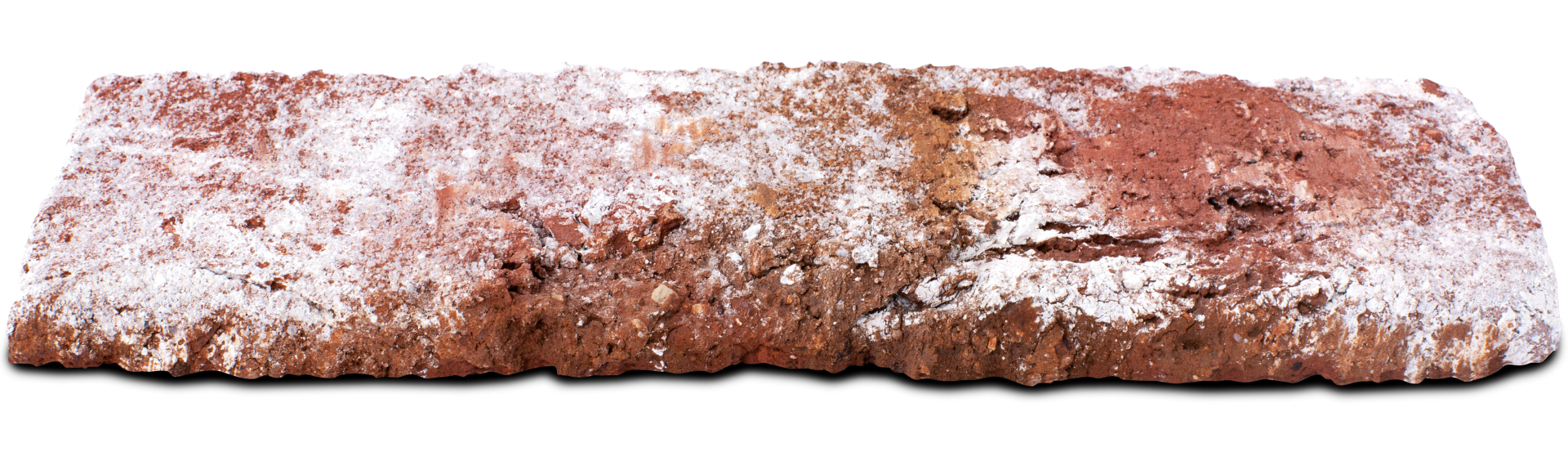
Mouldes Finishes
Using a traditional method adapted to modern production techniques, the clay is mechanically patted into a mould, giving the impression of being handcrafted. As a result, each moulded brick features deep grooves and irregular edges, making it a unique, rustic piece.

Something special: white ceramic brick slips
Our ceramic brick slips made from Westerwald white-firing clay are in a class of their own: they come from the ‘Kannenbäcker-Land’, a region in the Westerwald renowned for its exceptional clay deposits. Nowhere else can one find white and light-firing clays of this particular quality. Thanks to the illite, the brick slips can be densely fired at over 1,000°C to achieve a water absorption rate of less than 3%. Due to their sintered surface – which is sealed during firing – they absorb very few dirt particles. This is a major advantage, particularly for white façades, as dust that settles on the surface is simply washed away by the next rainfall.
Through the finely tuned addition of selected minerals, Röben can produce an almost infinite range of grey shades based on these white-firing clays, in accordance with the architect’s specifications.

White clay
The raw materials for our famous white ceramic brick slips are sourced exclusively from clays dating back 25 to 40 million years, originating from the first sedimentation phase in the Westerwald. They are virtually iron-free. Essentially, Röben clay contains the three key mineral types: kaolinite, illite and quartz. Kaolinite guarantees – as is well known from porcelain production – a perfect white colour. Thanks to the illite, the ceramic brick slips can be fired to a density with water absorption of less than 3%. Finally, the quartz is present in its free crystalline form, in some cases very fine and unusually pure, practically free of coloured inclusions – another prerequisite for pearl-white clinkers.

By carefully adjusting the addition of selected minerals, Röben can produce an almost infinite range of grey shades using white-firing clays, in accordance with the architect’s specifications.

We look forward to hearing from you.
Dirk Staasmeier Specialist advisor
You can reach us by phone
Monday - Friday from 8:00 - 16:30