
"Old" and New in Dialogue – Administrative Building in Baar (CH)
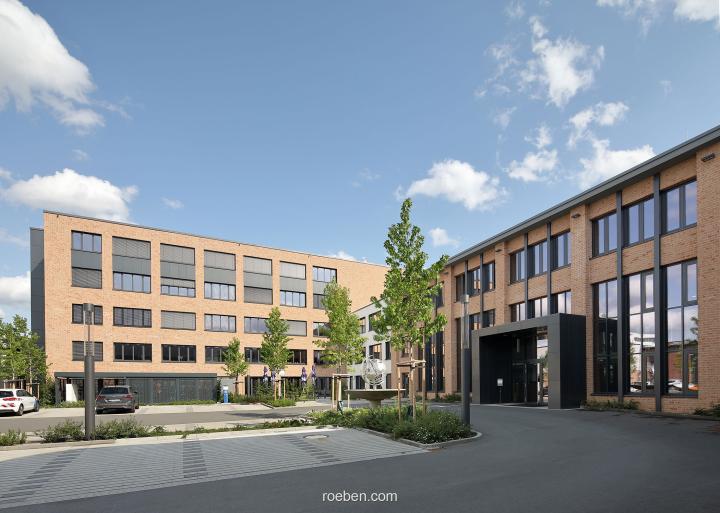
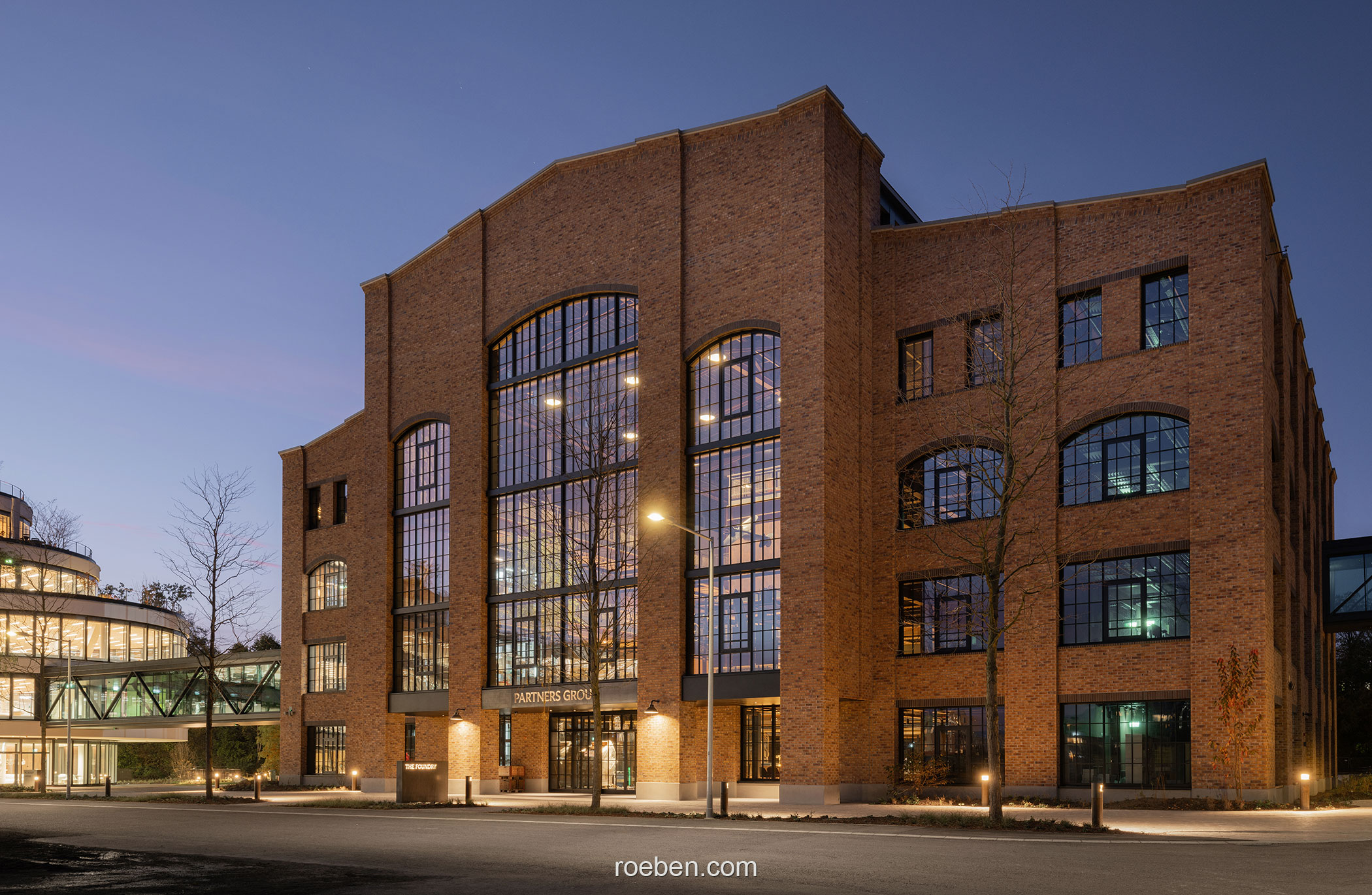
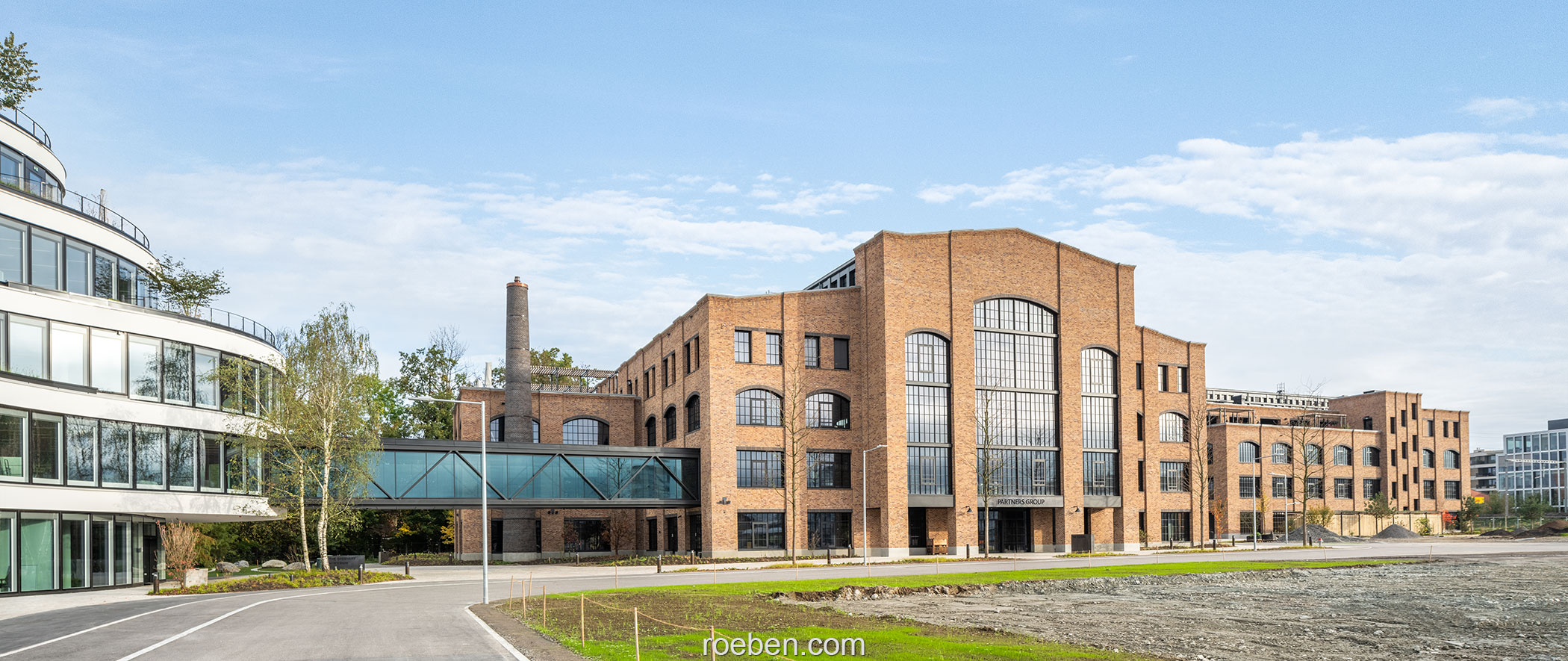
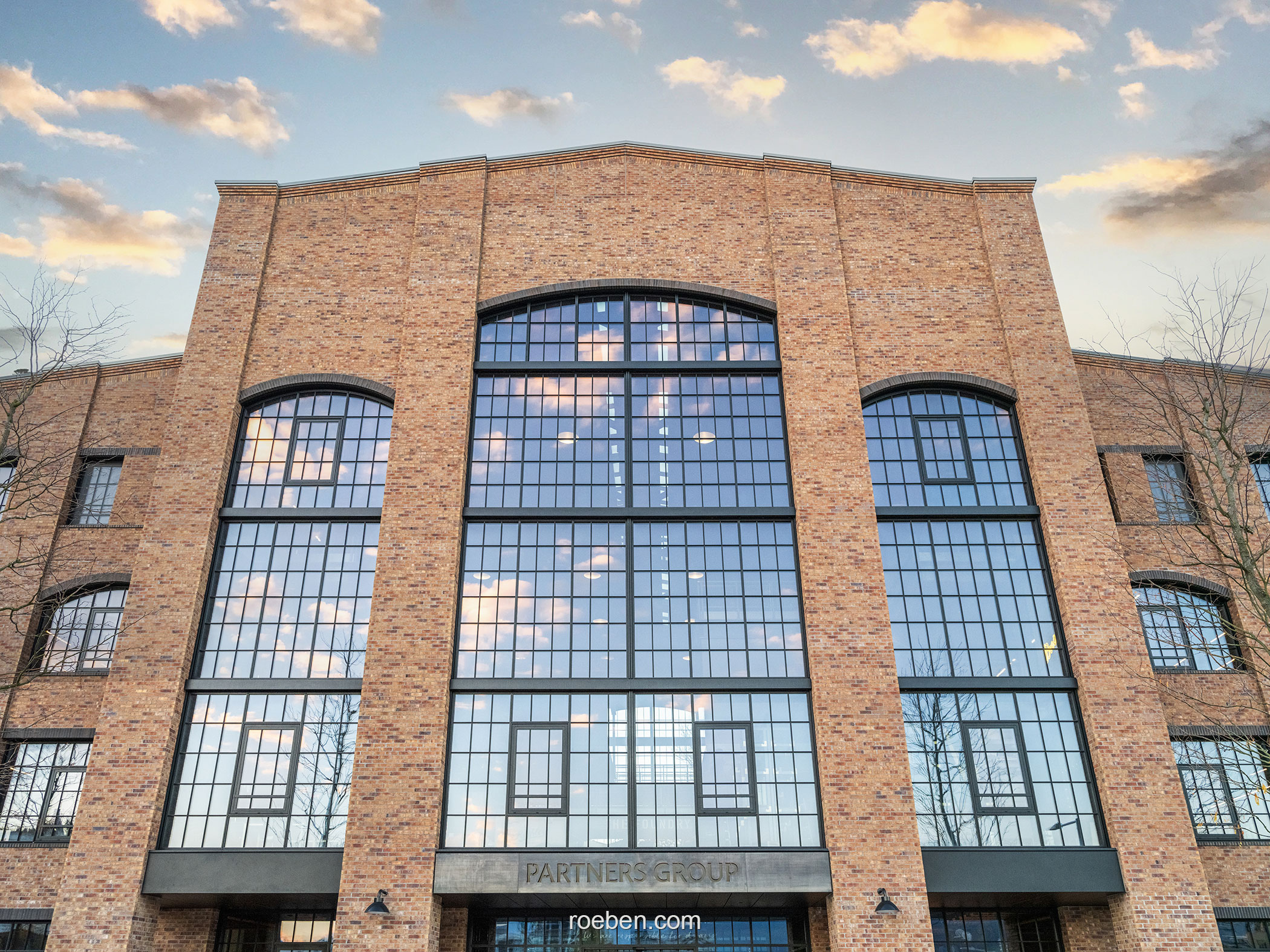
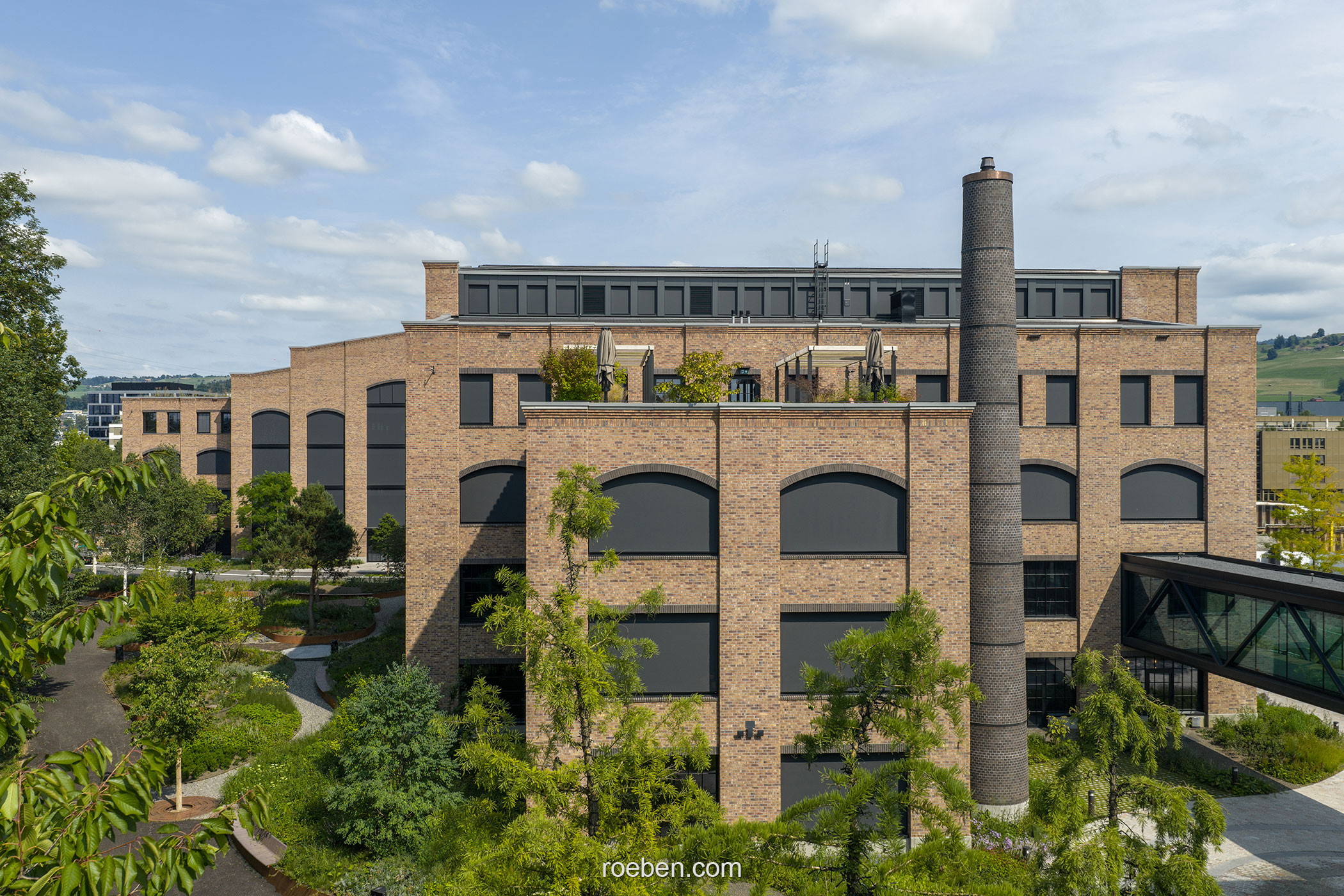
Photo © Röben/Christof MöriIn Baar, Central Switzerland, the asset manager Partners Group has moved into its new headquarters. At the heart of the complex are two newly constructed office buildings whose striking brick facades—made from Röben’s WIESMOOR earth-toned hand-molded brick—evoke the look of old industrial warehouses. As a deliberate contrast, an organically shaped “green building” with green terraces and white stucco/glass facades complements the campus.
Partners Group AG, a globally active Swiss asset manager specializing in private market investments, has moved into its new headquarters in the town of Baar, in the canton of Zug, which has a population of approximately 25,000. Designed by Axess Architekten of Zug, a strikingly staged complex of three office buildings has been constructed about 30 kilometers south of Zurich, housing a total of approximately 1,400 employees.
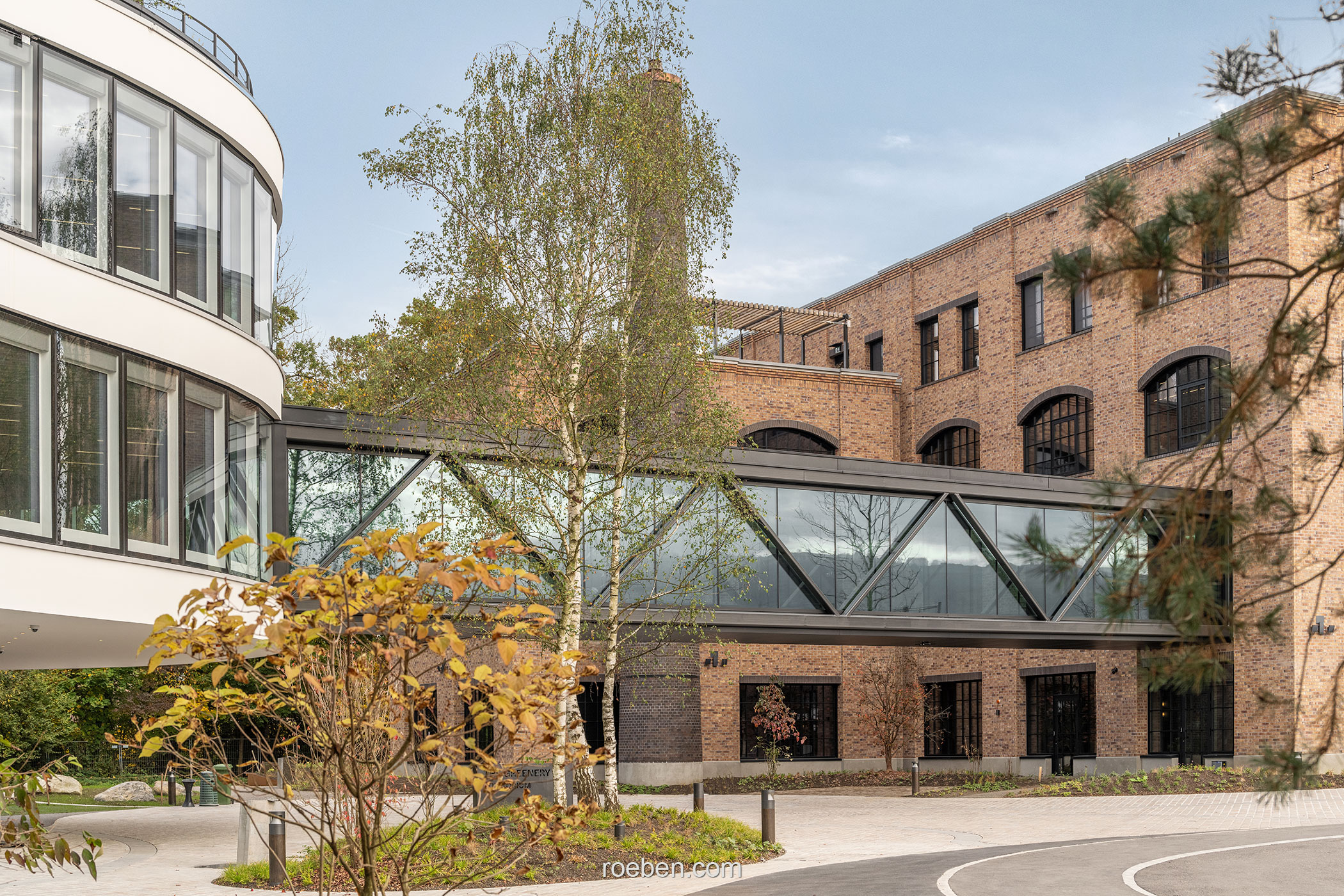
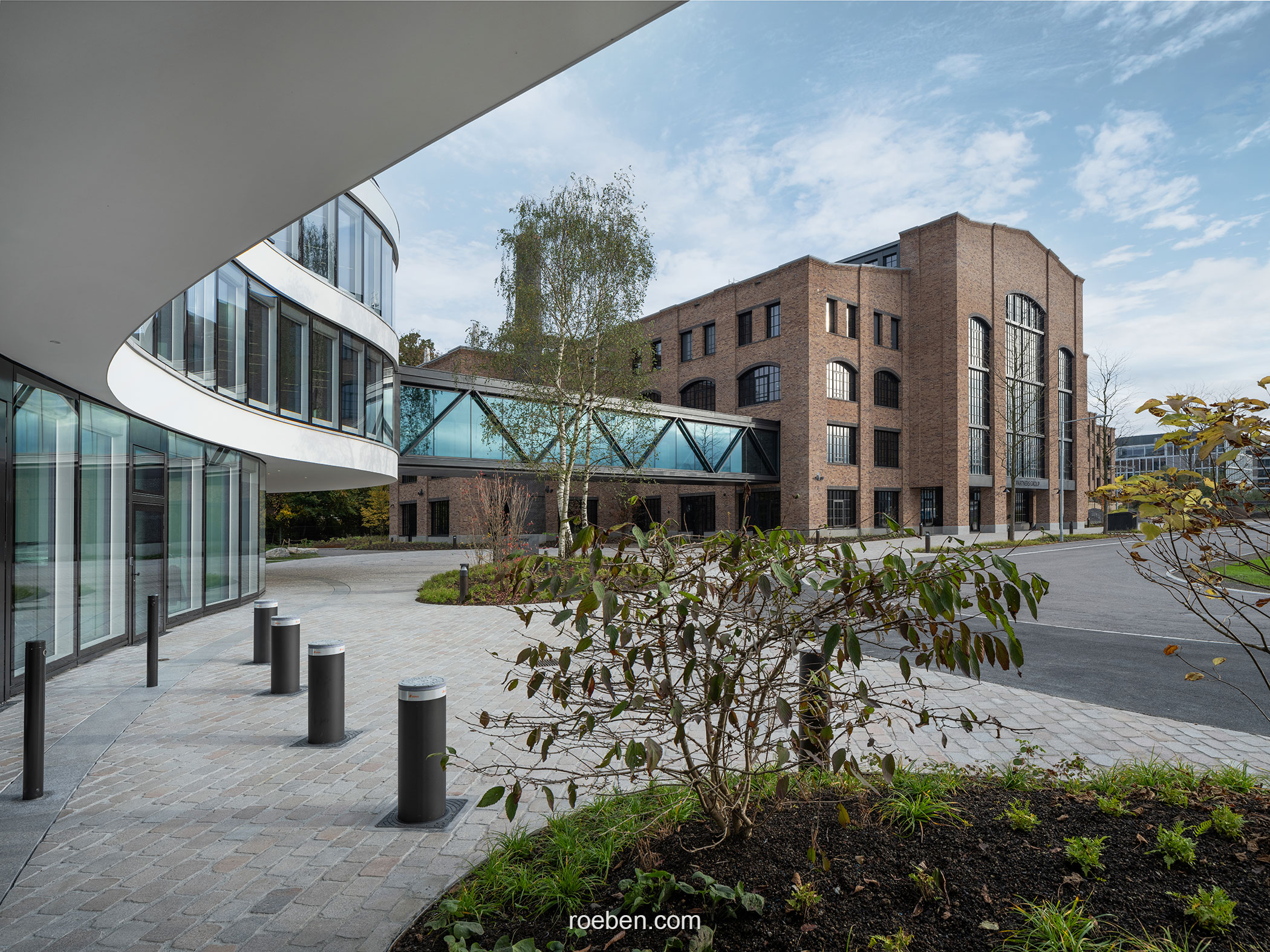
When planning the project, the client envisioned—drawing inspiration from the design of the U.S. headquarters in Denver—an unusual blend of old and new that would, at first glance, visually represent the company’s corporate identity. The architects therefore designed two of the buildings as yellow-brown brick structures in the style of old industrial halls. The third building, by contrast, is designed as a “green building” featuring futuristic, organic architecture. The three structures are directly connected to one another by glass-enclosed walkways. Together, they form a campus rich in contrasts that vividly links the past, present, and future.
“Old” and New in Dialogue
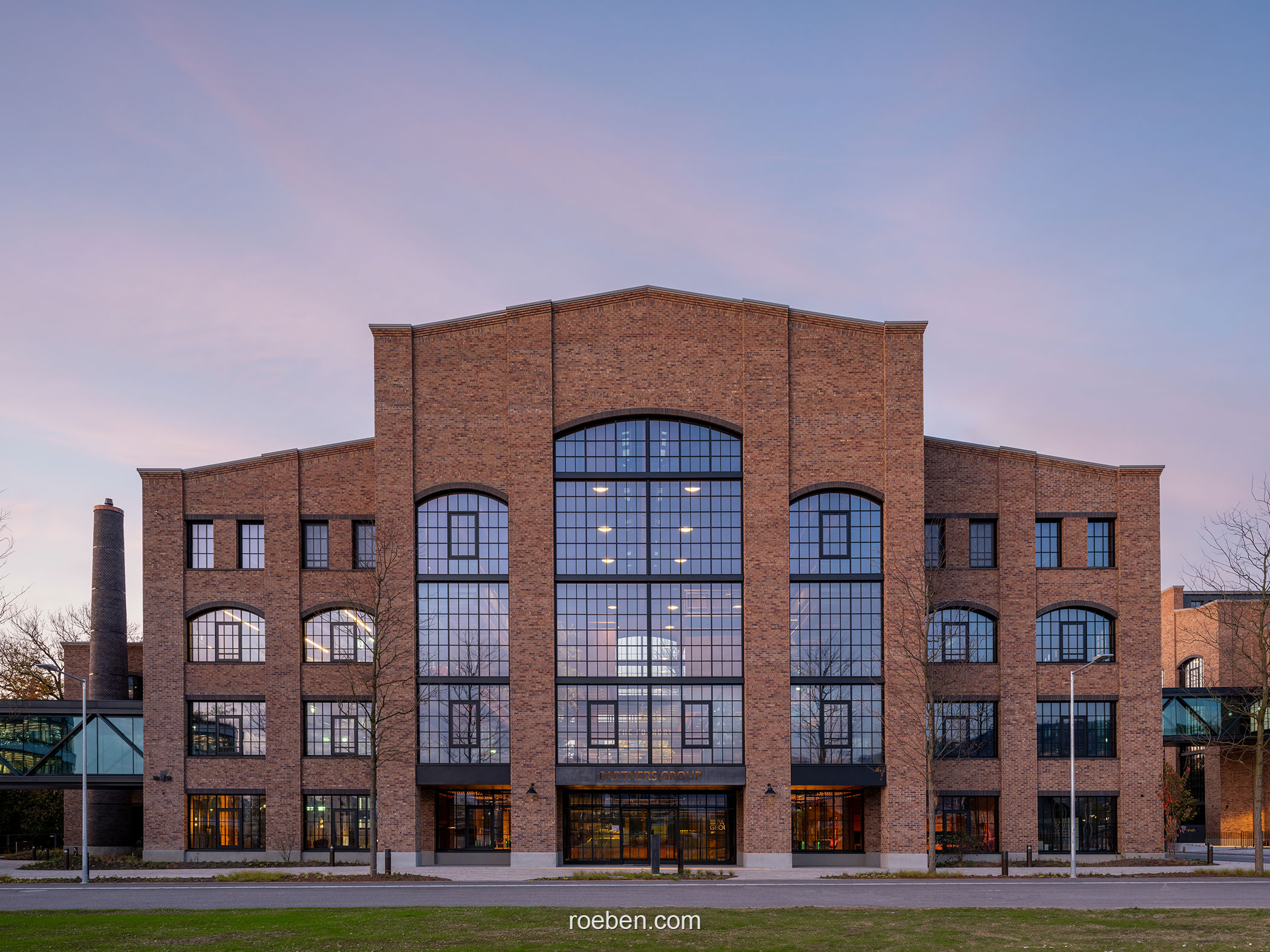
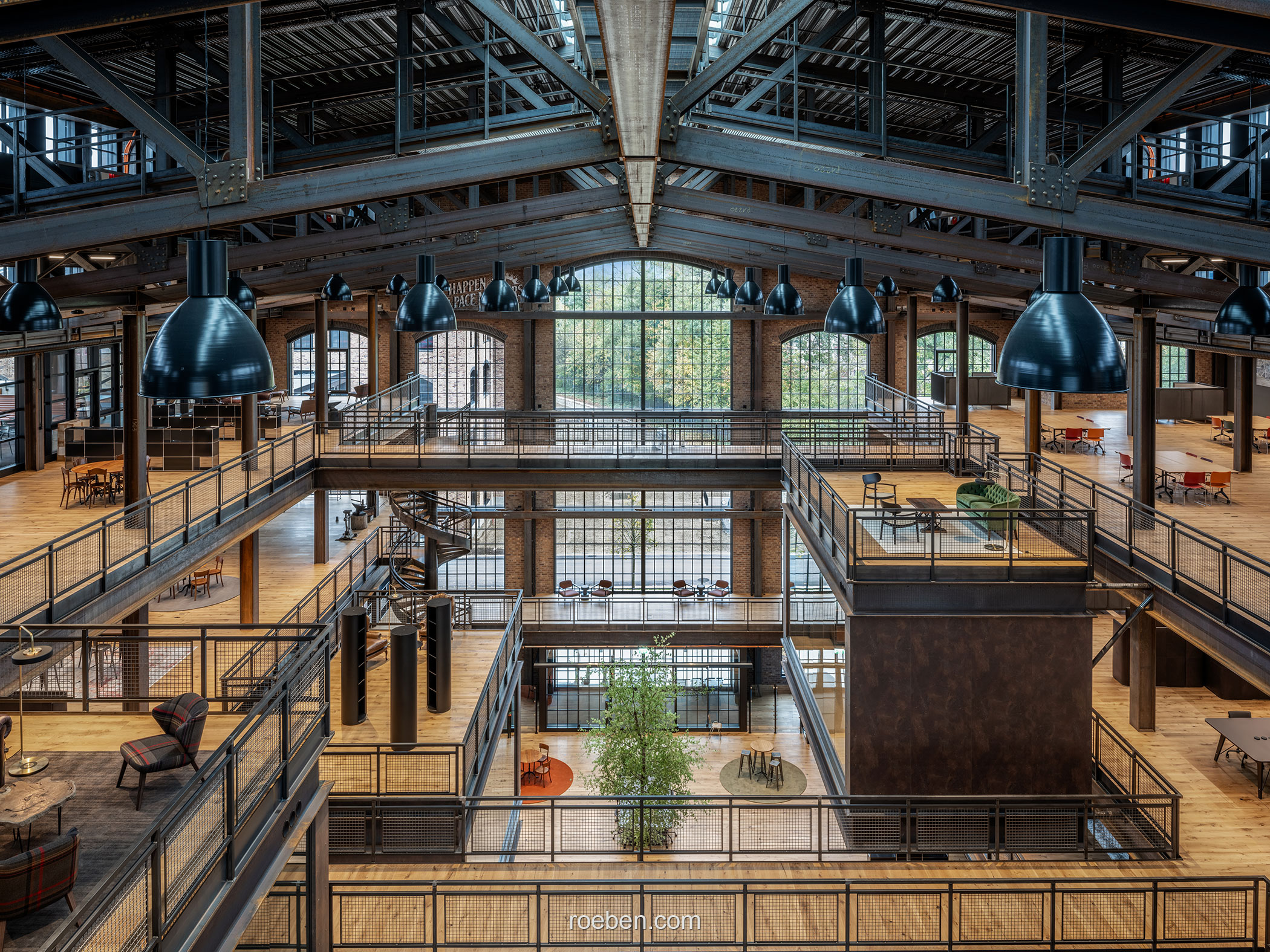
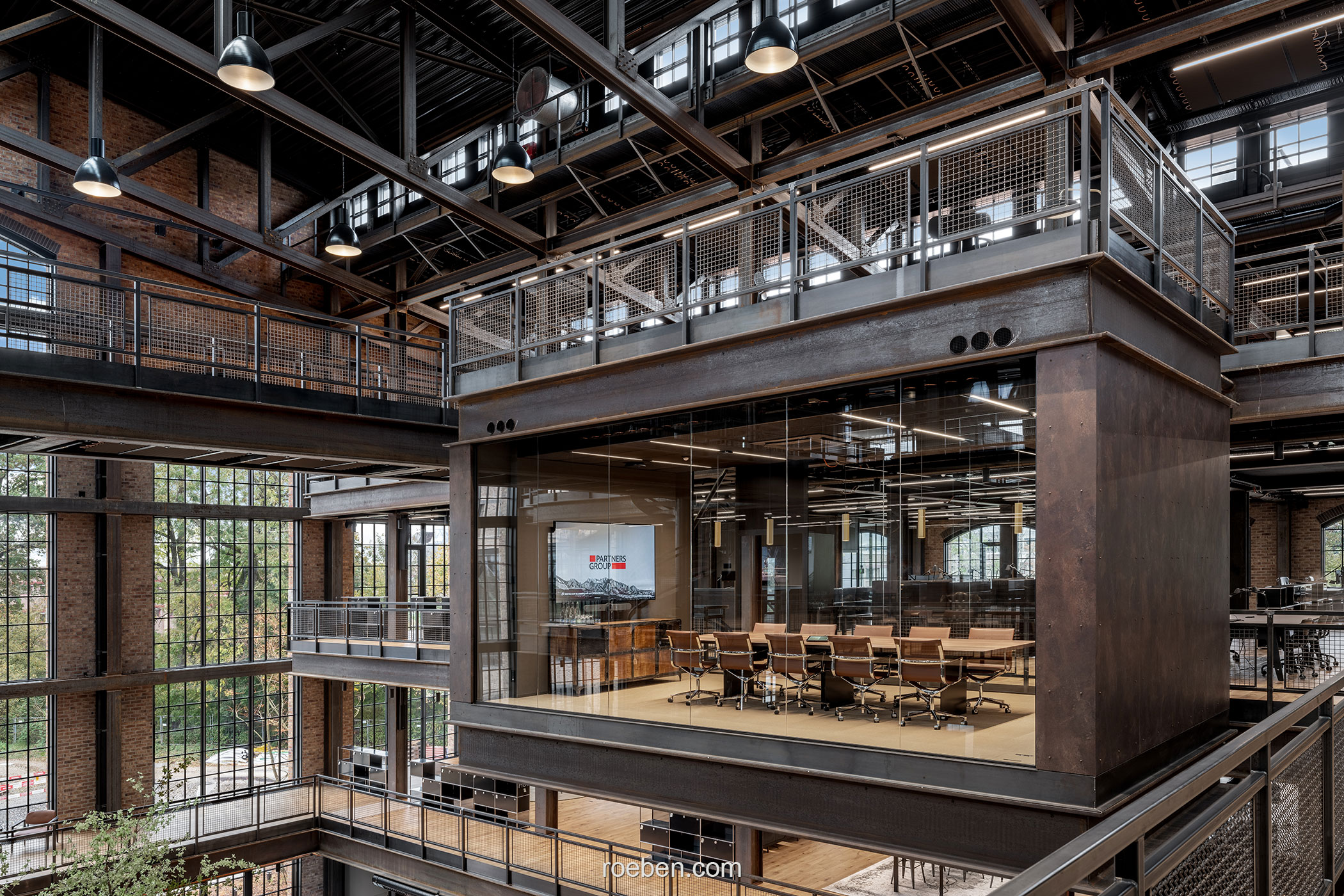
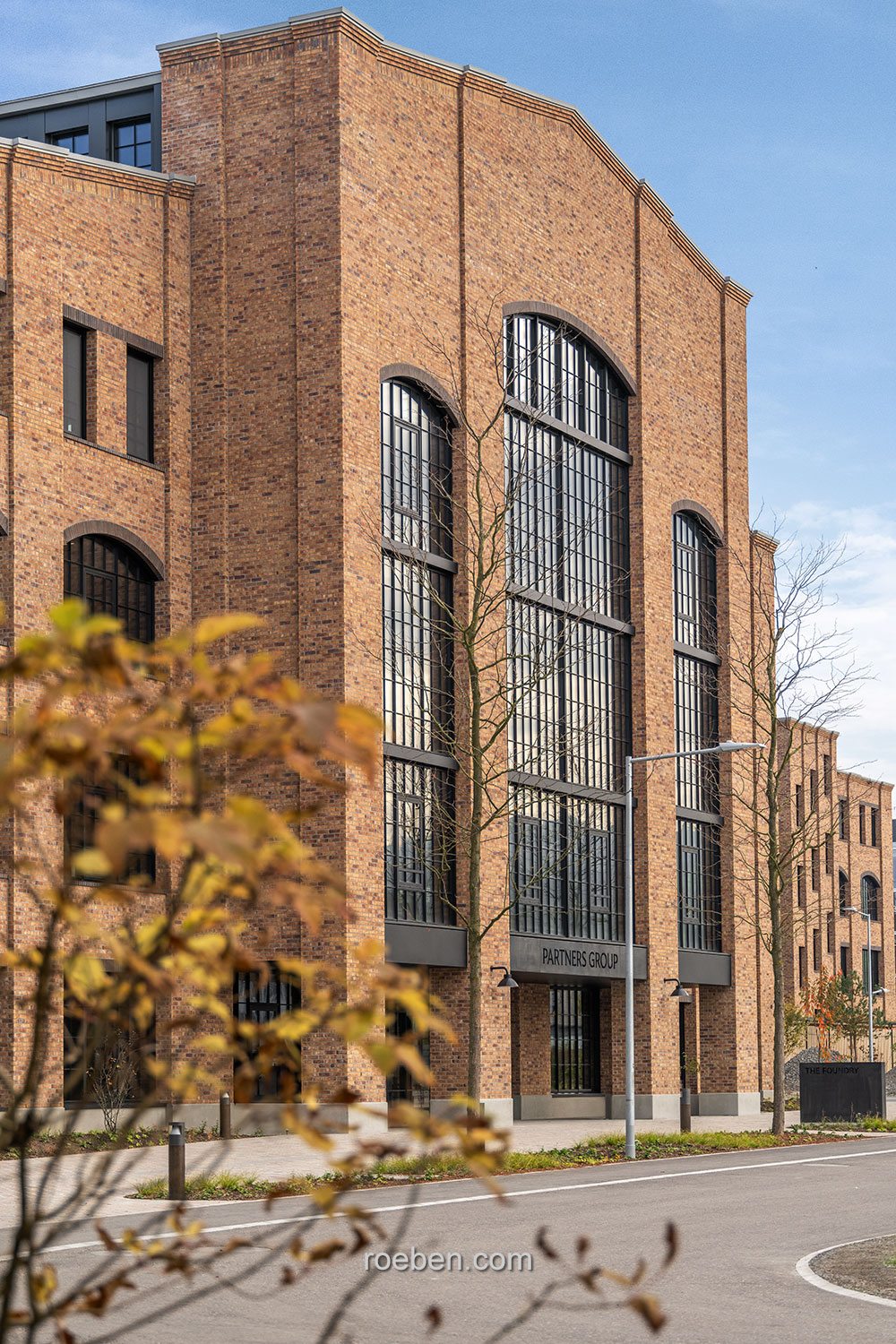
In designing the two “old buildings,” the planners drew inspiration from the architecture of 19th-century industrial halls. The combination of exposed masonry, generous window areas, industrial materials, and robust details has created an unusual work environment that radiates solidity and durability at first glance. A centrally located chimney underscores this character and lends the ensemble additional charm. Inside, the space is defined by tall, open rooms with diagonal and vertical sightlines. Through this interplay, the architects have achieved a surprising sense of transparency, brightness, spaciousness, and spatial power that contrasts the industrial exterior with a contemporary openness: “The built void, with the interplay of the individual levels and the diagonal sightlines it creates, is unique in Switzerland,” says architect Philipp Ullrich.
As a deliberate contrast, the so-called “Green Building” complements the ensemble. The result is an organically curved, seven-story terraced building that stands out distinctly from the austere lines of the two brick structures. The lushly landscaped terraces and the roof serve as a “fifth façade” and contribute to local climate regulation, promote biodiversity, and enhance the quality of life.
Expressively designed clinker brick facade
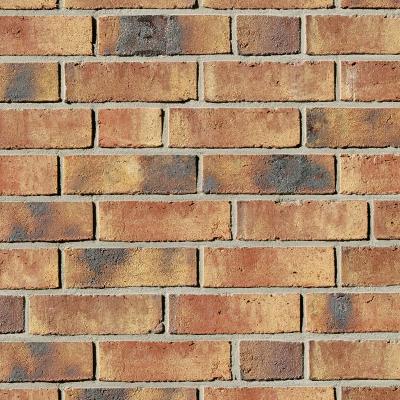
The planners devoted great attention to the selection of the clinker bricks, which lend the complex its distinctive character. After extensive sampling, the decision was made to use a commercial-grade selection of Röben’s WIESMOOR erd-bunt hand-molded facing brick in standard format. The brick impressed the project team above all with its fine texture and the vibrant interplay of colors between warm earth tones and delicate red hues.
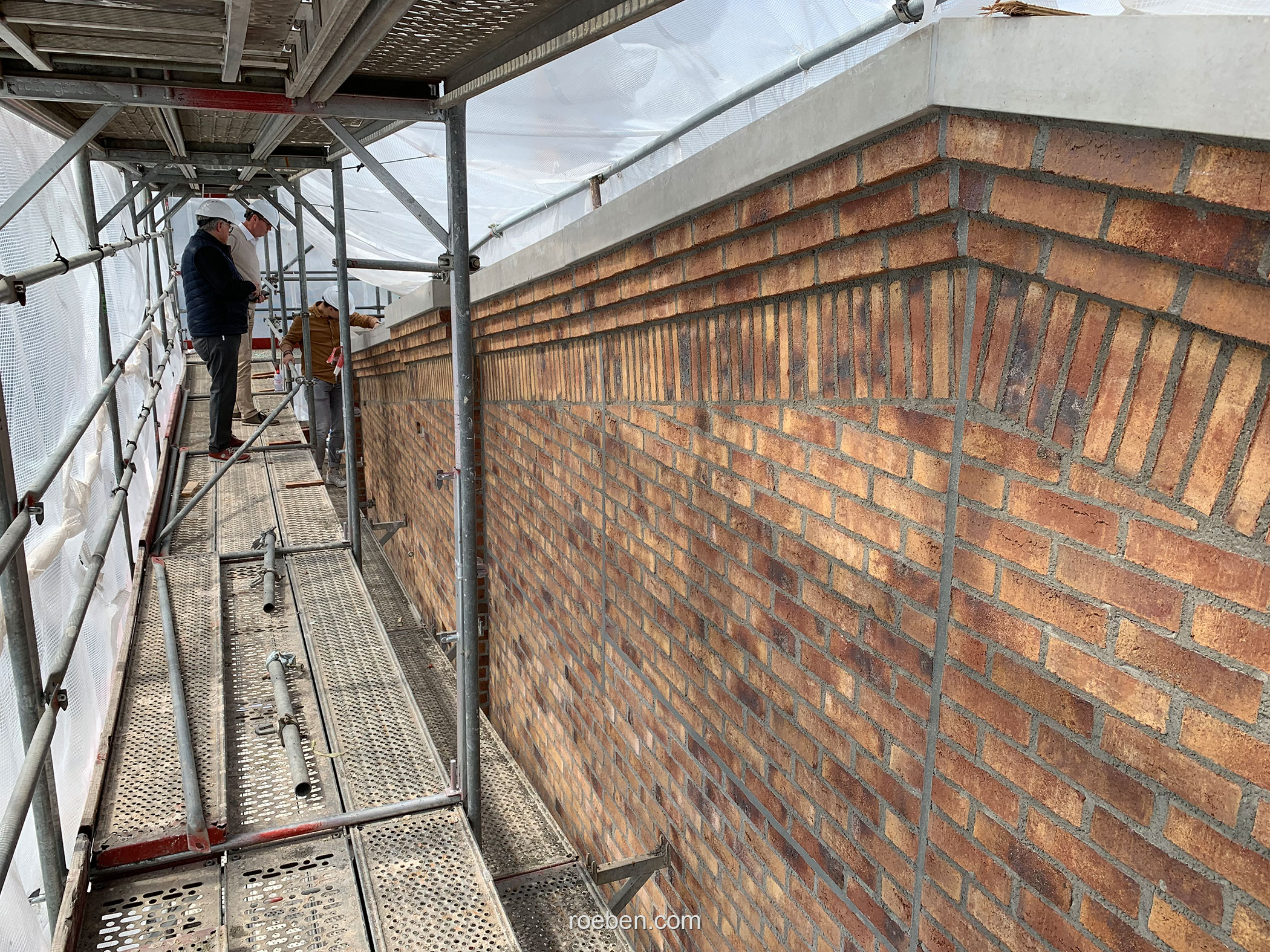
On the construction site, the clinker bricks were laid in a harmonious stretcher bond and grouted with light-colored mortar. The result is an expressive facade that subtly plays with light and shadow, giving the building ever-changing facets depending on the time of day and the weather. In parallel with the masonry work, the interior walls were clad with identical brick slips.
The result is a facade that not only exudes robustness and durability but also conveys an extraordinary sensuality and materiality.
The Roof First: Structural Solutions with Prefabricated Elements
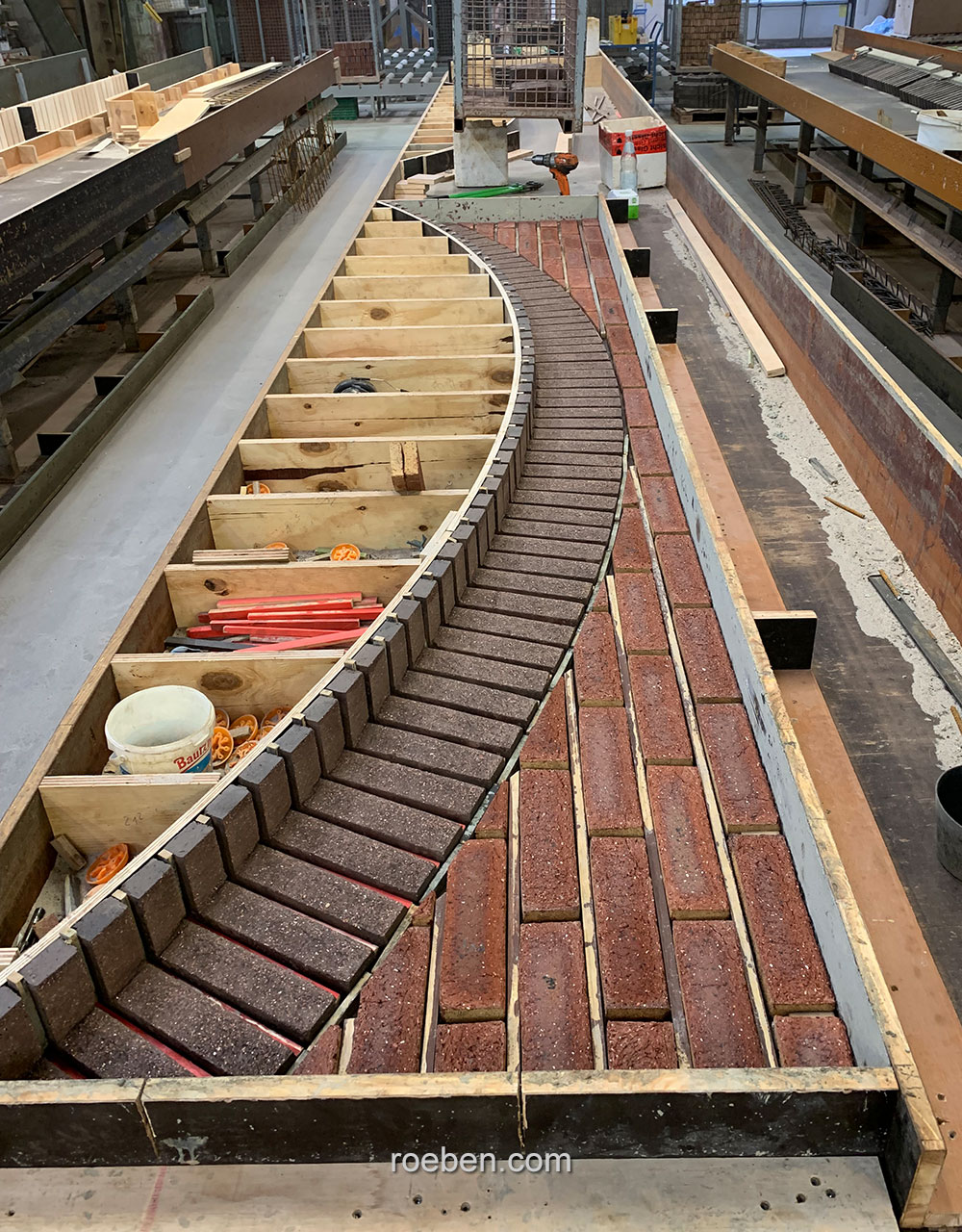
All segmental arches, lintels, and window sills were supplied by Röben as precast elements. “However, the design of the roof edge elements and their corresponding fastenings posed a particular challenge,” says Marko Kolbe, head of Röben’s Planning Service: They protrude up to one meter above the concrete substructure. “That’s why we developed massive elements with a height of up to 2.50 meters, which we were then able to secure to the substructure in their middle and lower sections using various stainless steel anchors.”
Another unique feature: To close off the roof as early as possible, the roof edge elements were not—as is customary—installed and adjusted above the conventionally completed masonry. Instead, the masons had to demonstrate their full range of craftsmanship to complete their work with pinpoint precision directly beneath the precast elements that had already been installed, ensuring an invisible transition to the precast elements.
The result is an exciting synthesis of “old” and new that deliberately defies conventional categorization at the Partners Group Campus.
Axess Architects
ZUG (CH)
axess.ch