


OPUS – Residential Development in Ulm
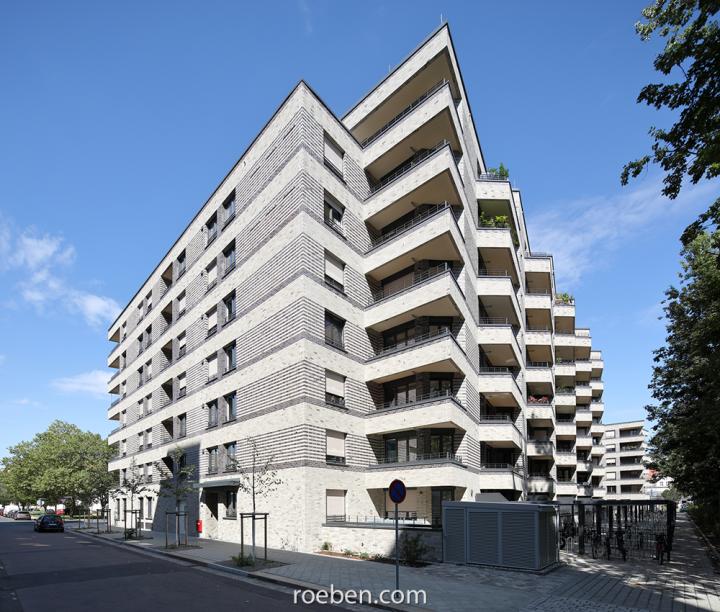
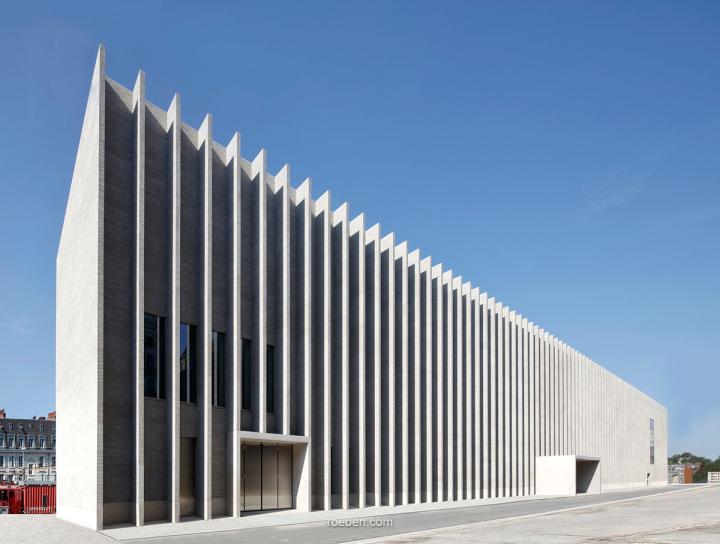
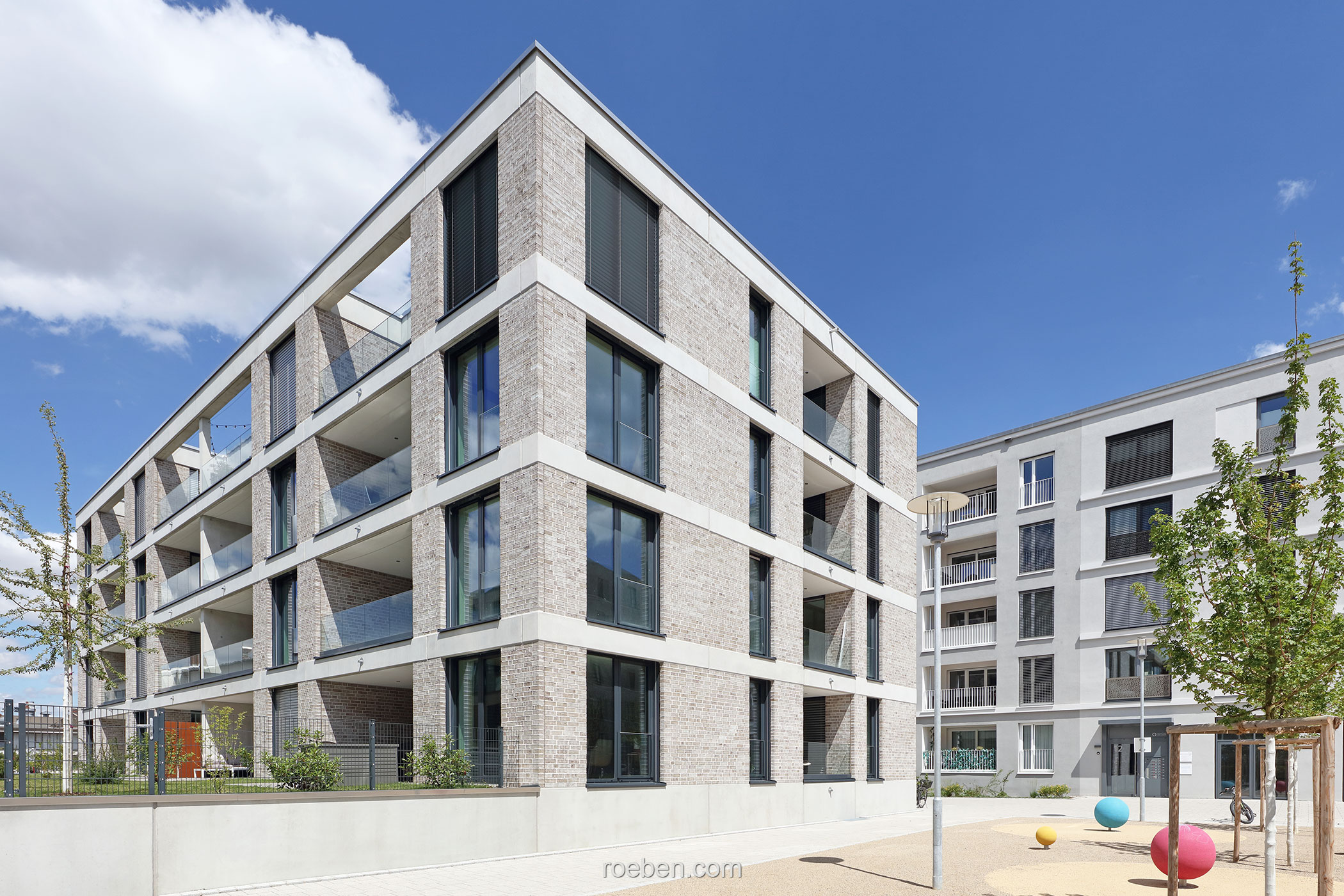
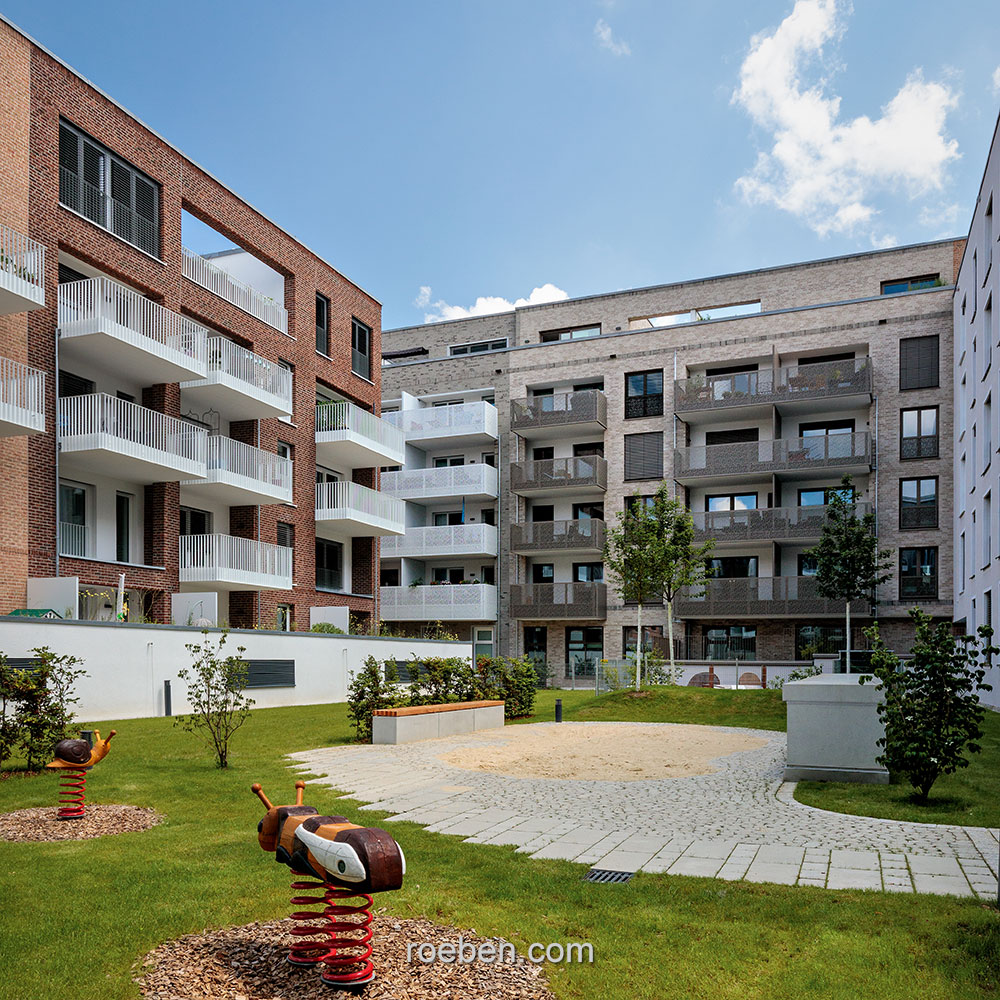
Photo © Röben/Sascha SzidatA new urban neighborhood has been created on the former site of the Gummi-Welz-Werke in Ulm, combining residential and commercial spaces with a high quality of urban life. At the core of the urban design concept is perimeter block development featuring green courtyards and a central neighborhood plaza as its heart. With the completion of the OPUS residential building, a key component of the project has now been finalized. The light-colored clinker brick façade lends the building a serene, almost sculptural presence.
With its historic town center and close proximity to local recreational areas such as Blaupark and Hochsträß, the Söflingen district is one of Ulm’s most popular residential neighborhoods. Located at the intersection with the city center, on the site between Einsteinstraße, Magirusstraße, Griesgasse, and Söflinger Straße, the company Gummi-Welz was based there until 2008. After the site was abandoned, the land lay fallow for some time.
In 2010, MUNK Bauen & Wohnen GmbH acquired the site and, in 2017, in consultation with the city, conducted an urban planning competition, from which the Stuttgart-based firm Orange Blu Architekten emerged as the winner. The winning design forms the basis for the development of an urban neighborhood combining residential and commercial spaces.
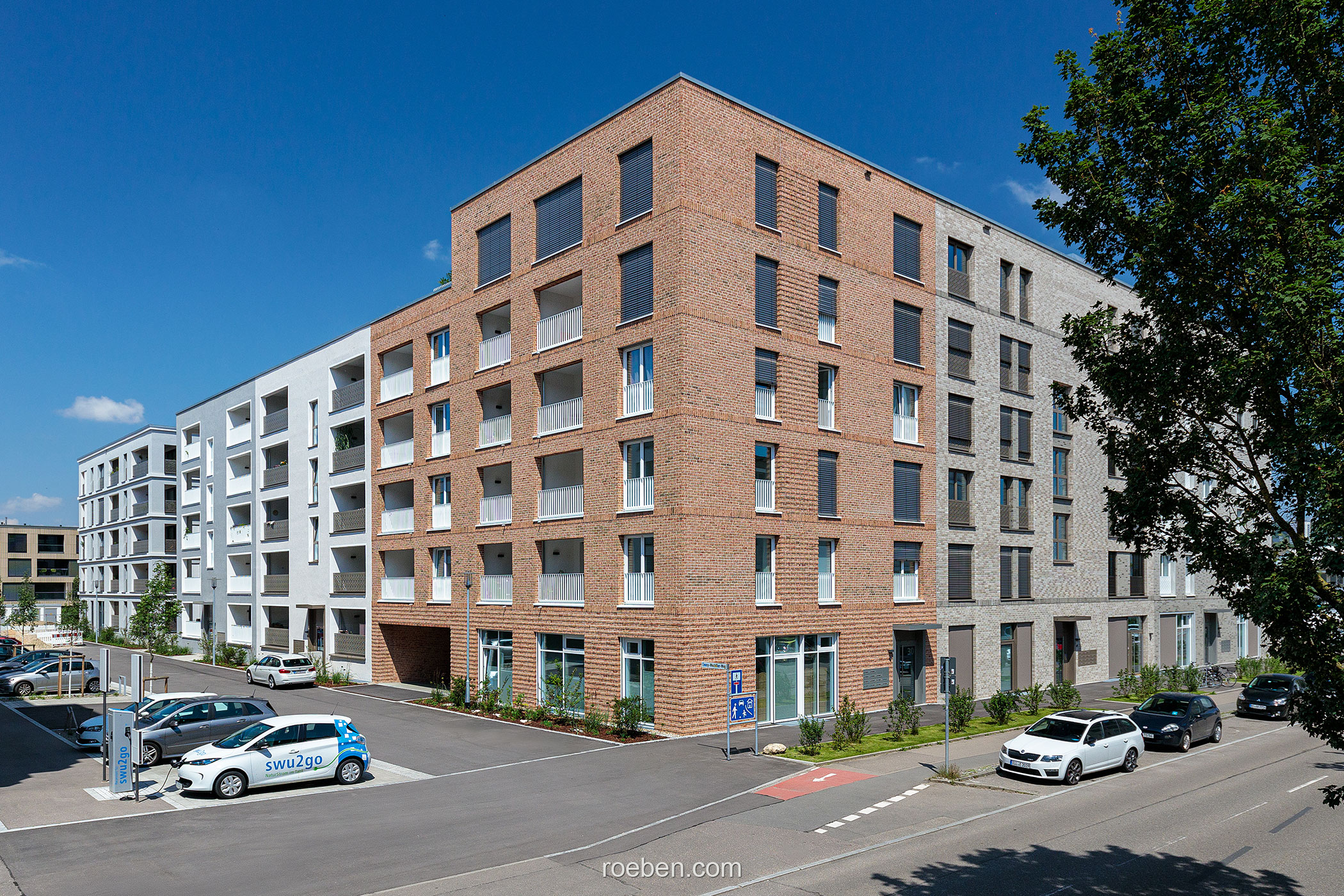
The complex, designed by various architectural firms, consists of seven buildings of varying sizes that together enclose a semi-open courtyard. Spanning four to six stories, they offer 195 spacious and airy apartments ranging in size from 30 to 190 square meters. Office, retail, and medical practice spaces along Magirusstraße help attract the desired foot traffic and enliven the neighborhood. A completely new urban block has thus been created on the approximately 15,000-square-meter former commercial site.
Sculptural Presence
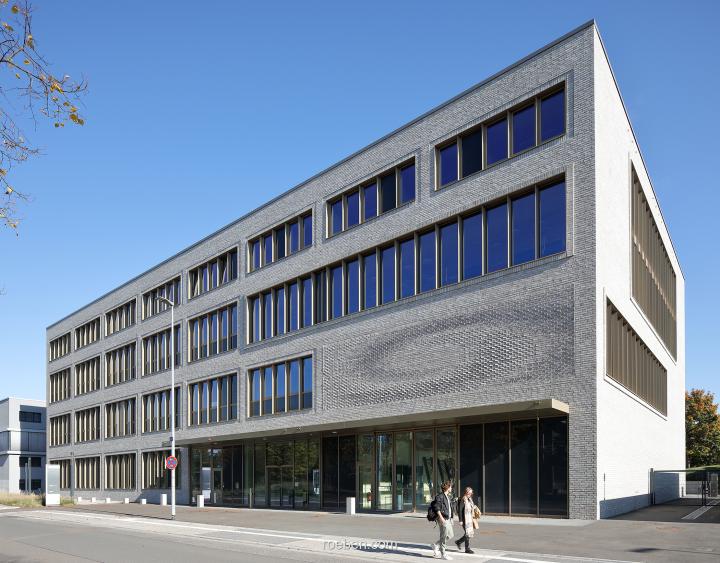
In the second construction phase, implemented according to plans by Seidel Architekten, three Röben clinker brick slips were used: CALAIS carbon, MANUS kyra carbon, and MOORBRAND lehm-bunt. Through the interplay of different colors and textures, the project team has succeeded in creating a pleasantly vibrant neighborhood with a rich variety of contrasts.
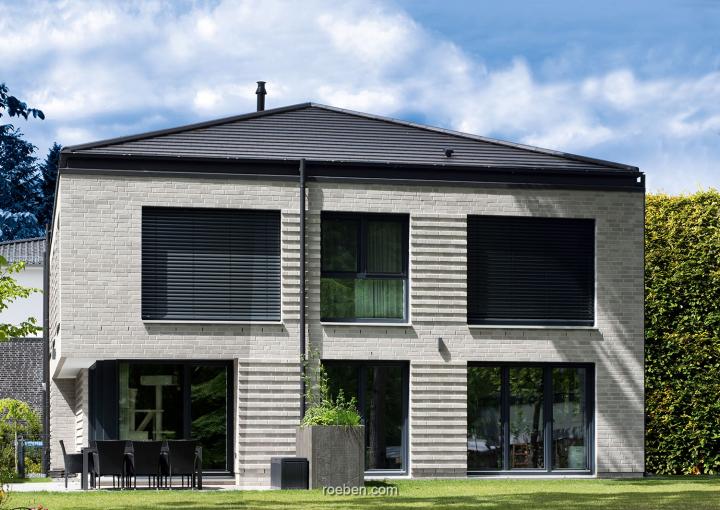
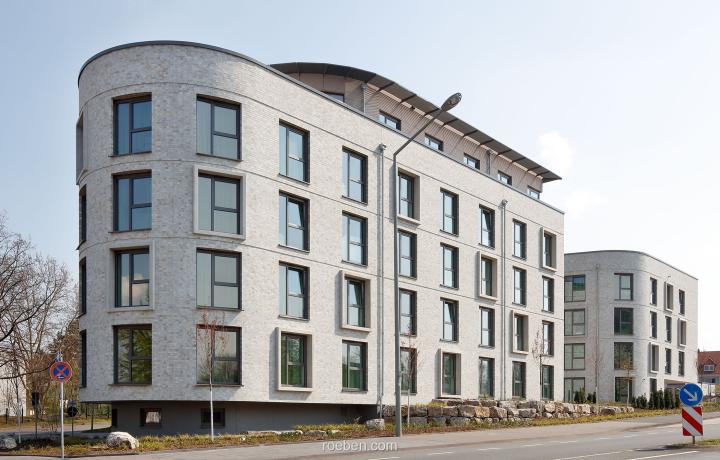
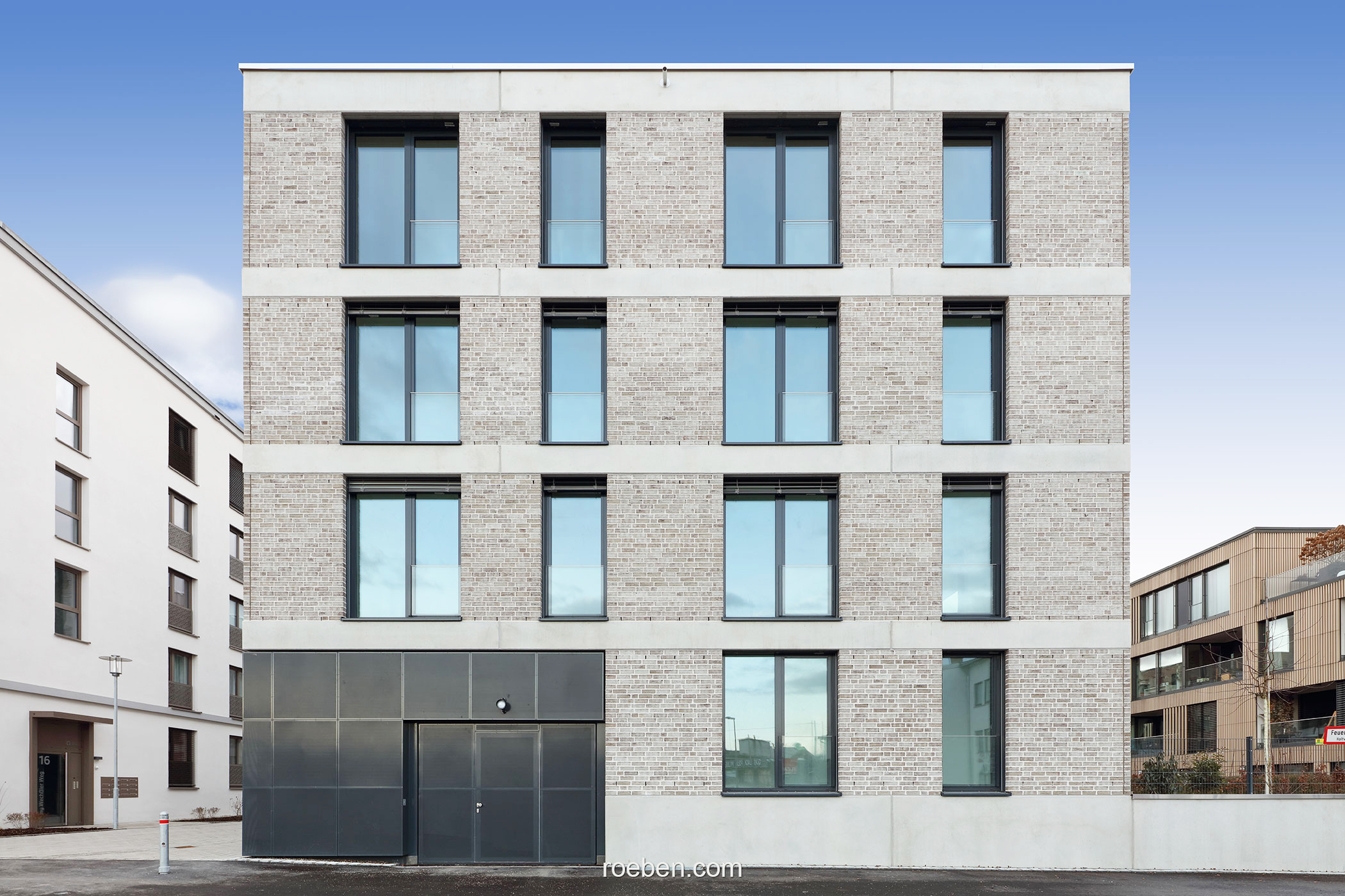
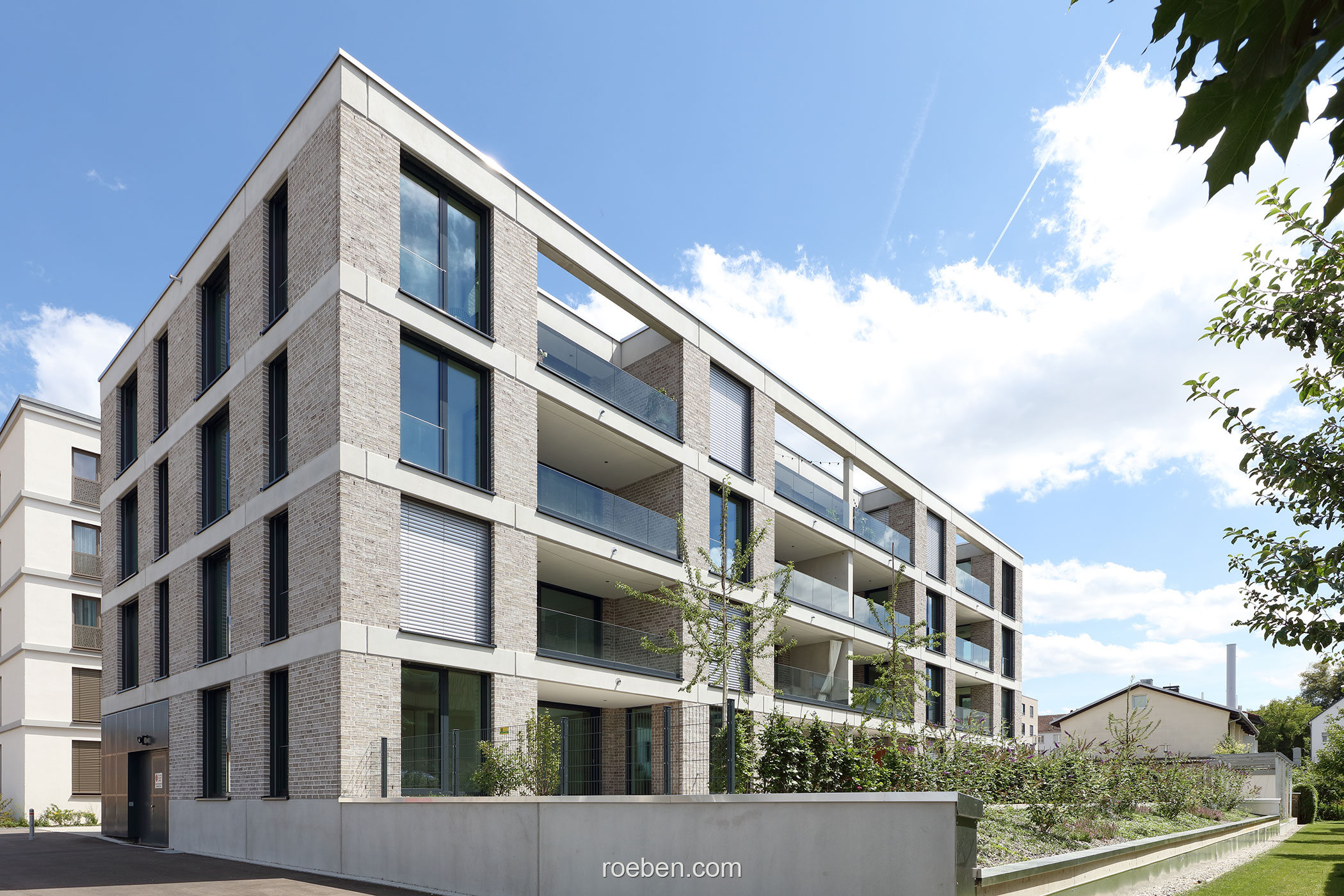
In the third construction phase, the OPUS residential building was recently completed. Designed by hochstrasser.architekten. from Ulm as a defining element of the neighborhood’s identity, the project occupies a special status within the neighborhood thanks to its sophisticated design and high-quality detailing. In their design, the architects prioritized clarity and material authenticity. The light-gray clinker brick façade, combined with wide, horizontally running bands of exposed concrete and individual sections of light-colored stucco, lends the building a calm, almost sculptural presence. Floor-to-ceiling aluminum windows enhance the openness of the floor plans, while loggias and large-format sliding elements seamlessly extend the living space outward. The architectural concept is complemented by energy-efficient construction in accordance with the KfW-55 standard, as well as underground parking spaces with infrastructure prepared for e-mobility.
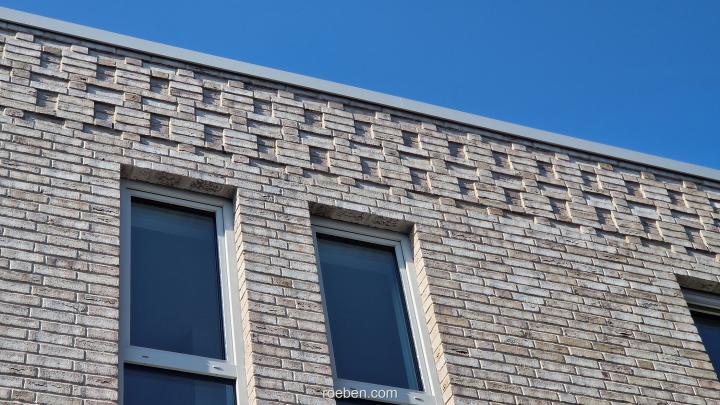
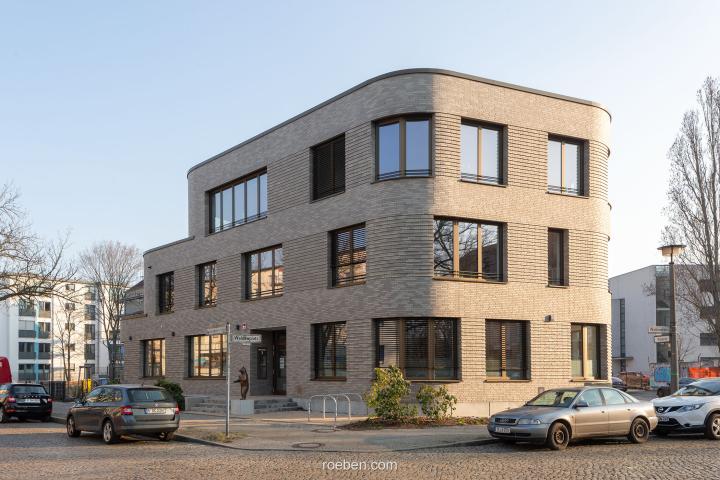
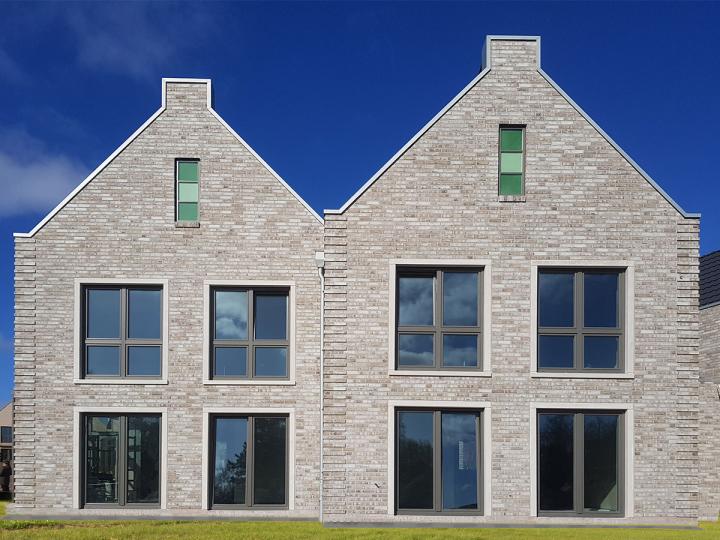
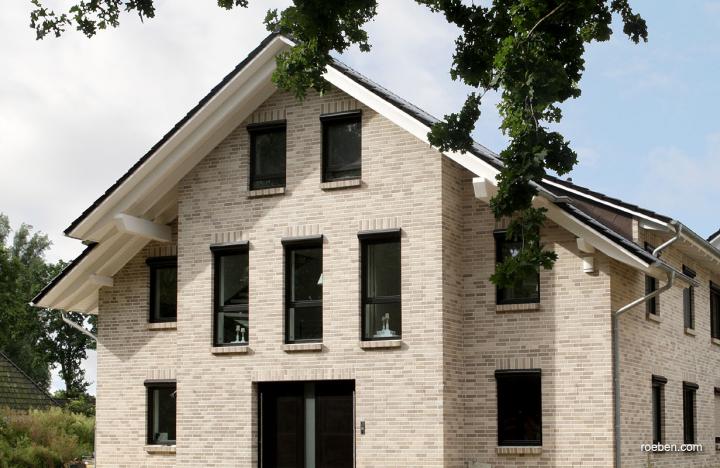
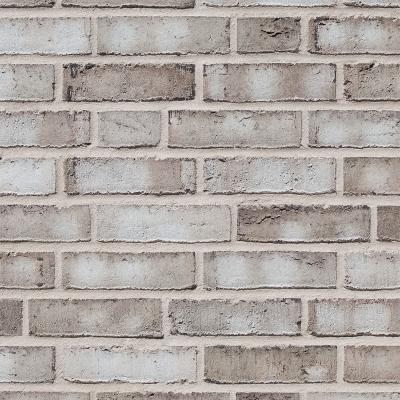
The conventional brickwork of the facade was carried out using Röben’s WIESMOOR hellgrau-bunt facing brick, combined in some areas with identical 14-millimeter brick slips. The bricks, supplied in standard size, laid in a random bond pattern, and grouted in a light color, harmonize perfectly with the anthracite-framed aluminum windows. They emphasize the open and inviting character of the development and blend sensitively into the urban environment.
A unique aspect of the planning and execution was the challenge of installing the clinker brick facade on the horizontally running exposed concrete pilasters without having to create an additional support for the clinker bricks. “The pilasters were therefore designed as load-bearing precast concrete elements and were thus able to directly transfer the resulting loads. This allowed us to do without additional brackets. In this way, the pilaster fulfills both the structural function of load transfer and the visual articulation of the facade,” explain hochstrasser.architekten.
The careful planning and high-quality construction demonstrate how inner-city brownfields can be successfully repurposed and how high-density housing can be convincingly implemented within an urban context. In a planned fourth construction phase, an additional 120 residential units and a senior-friendly housing concept are set to complete the neighborhood.
hochstrasser.architekten.
Ulm
Seidel Architects
Ulm