
Rounded Corners, Angular Curves – Police Station in Bremerhaven
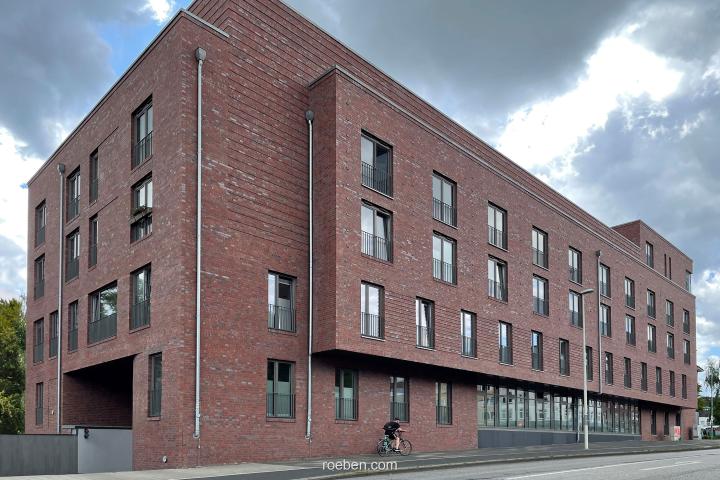
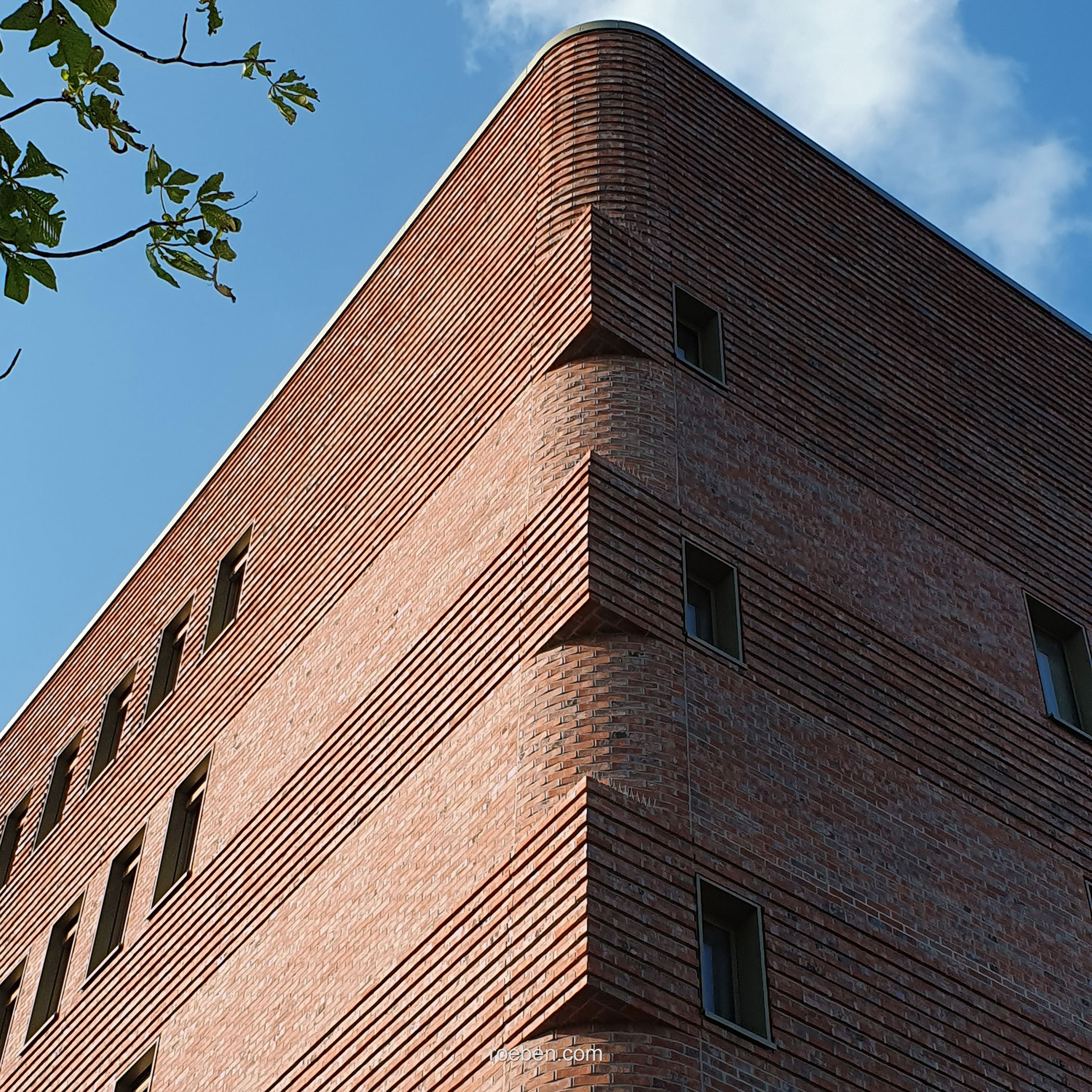
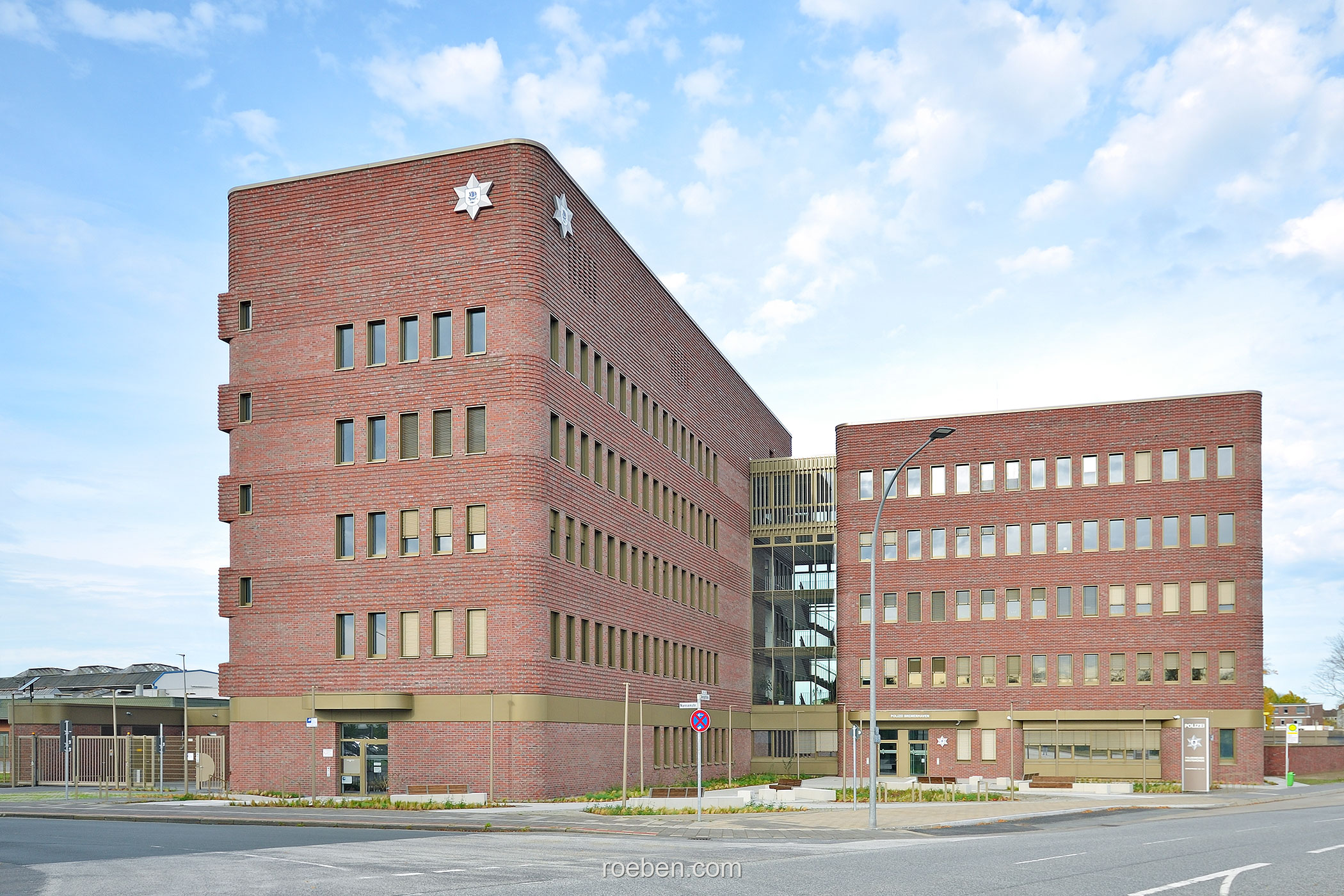
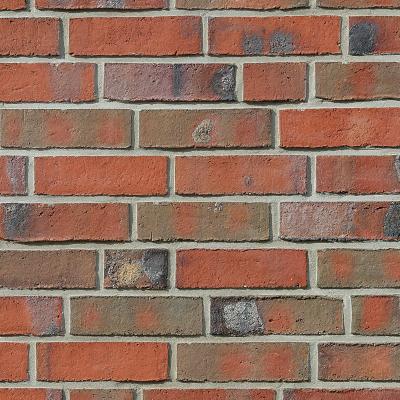
Photo © RöbenThe Geestemünde district of Bremerhaven has a new police station. The six-story design by the Bremen-based architectural firm Haslob, Kruse, and Partner stands out for its striking design language and features surprising, subtle details in the clinker brick facade. WIESMOOR red-blue-multicolored hand-applied facing bricks.
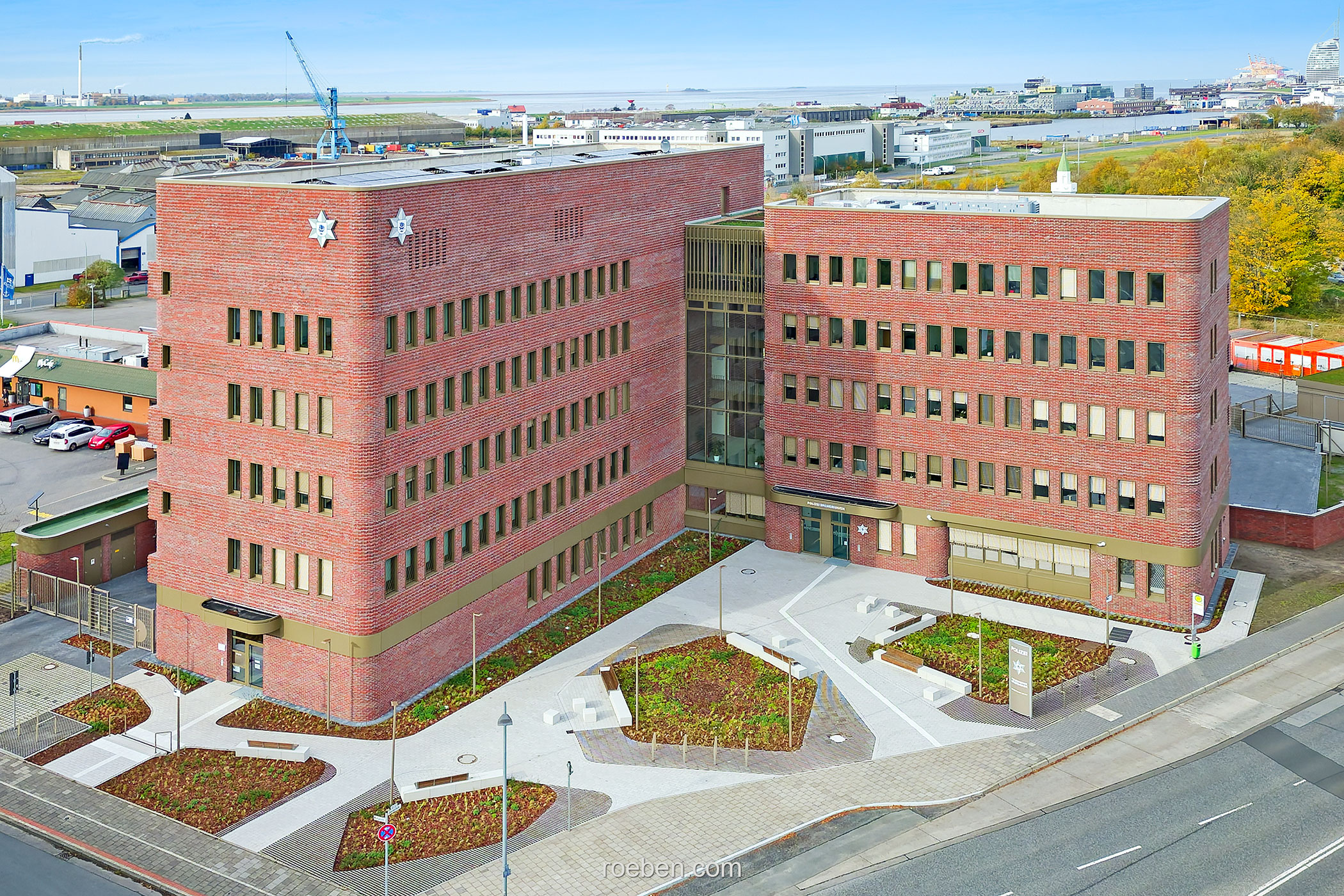
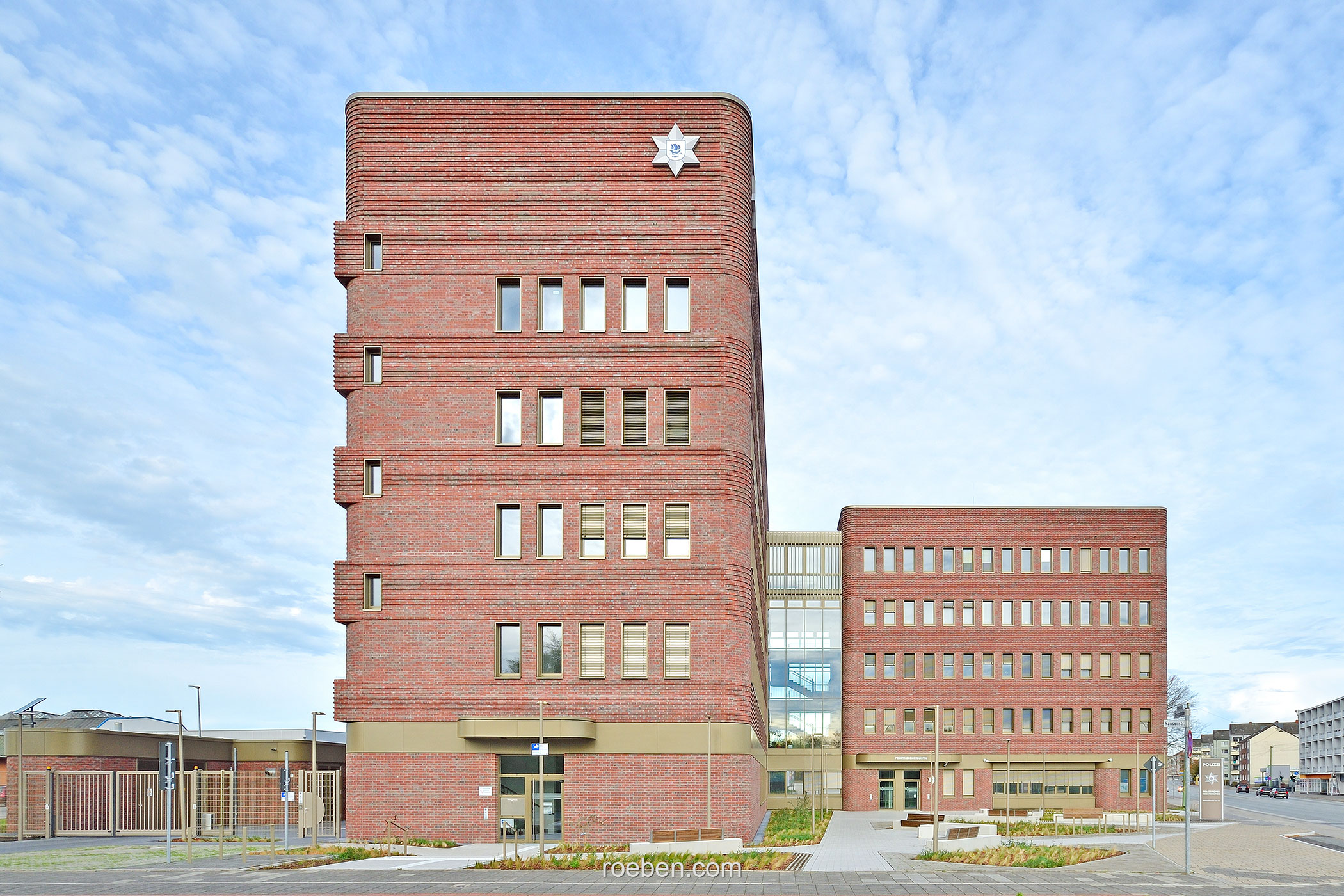
Whether it’s a university, the Historical Museum, or the Alfred Wegener Institute: throughout Bremerhaven, one can find fine examples of modern brick architecture. Another example of this deeply rooted tradition is the new building for the local police station in the Geestemünde neighborhood, which was completed a few weeks ago. With its elegantly rounded and sculpturally varied clinker brick façade, the six-story building marks the southern entrance to the city and simultaneously serves as a gateway to the adjacent shipyard district, which is set to be transformed in the coming years from a port area into a modern neighborhood offering a high quality of life.
The new building on the busy corner of Georgstraße and Nansenstraße replaces the previously used police building on Klußmannstraße, which had long since failed to meet today’s requirements for accessibility and modern work environments. The lower four levels of the new building house the police station, community police officers, interrogation rooms, offices, and staff facilities for the police; the fourth floor additionally contains offices for the State Data Protection Commissioner. The top level of the building is used as a technical floor. The developer of the new building is the STÄWOG Group, headquartered in Bremerhaven, and Gottfried Stehnke Bauunternehmung GmbH & Co. KG from Osterholz-Scharmbeck served as the general contractor.
Complex Building Design
Following a Europe-wide call for bids, the design was carried out by the Bremen-based architectural firm Haslob, Kruse + Partner, which in recent years has designed, among other projects, the Fraunhofer MEVIS research building and the Beluga shipping company building in Bremen.
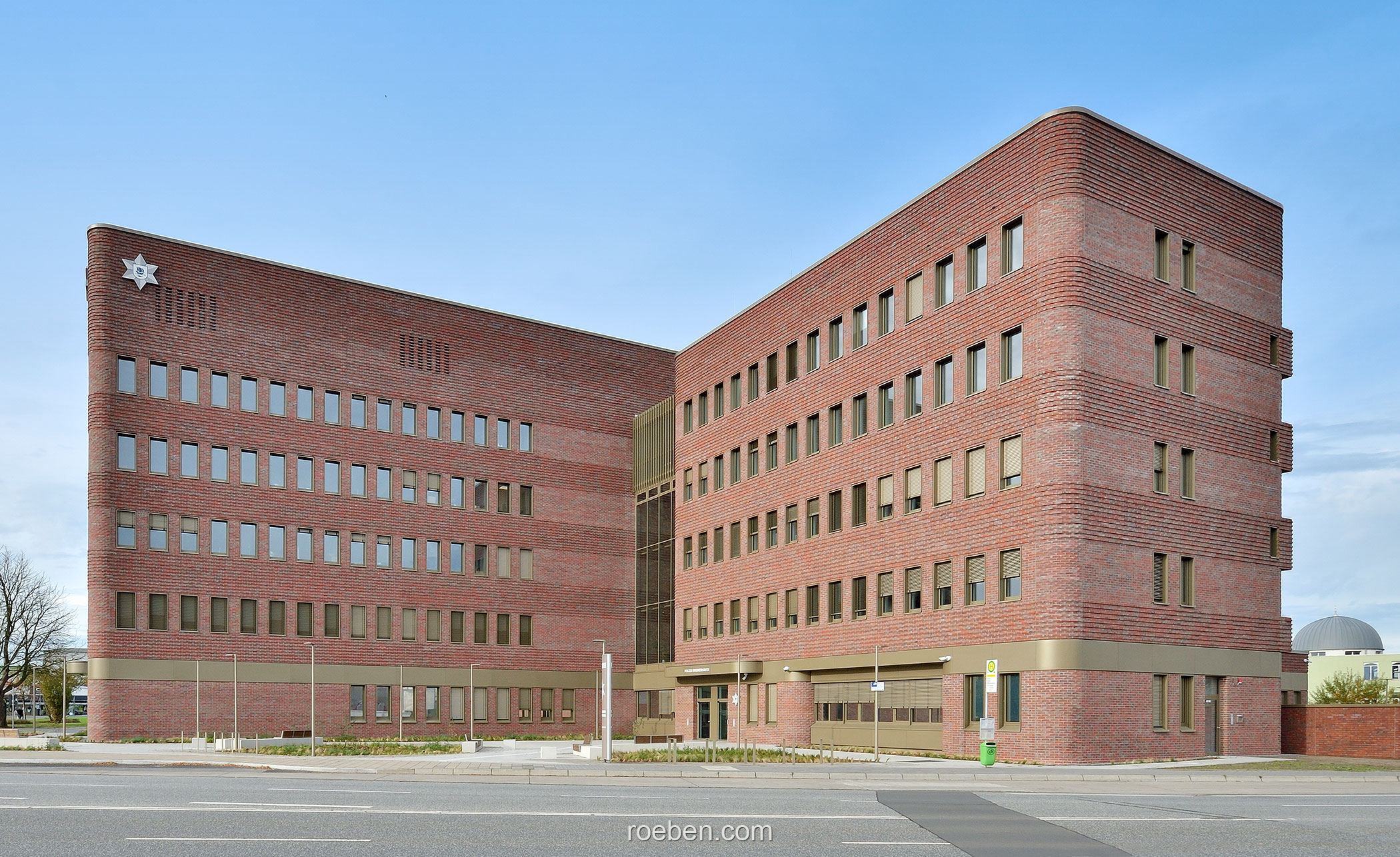
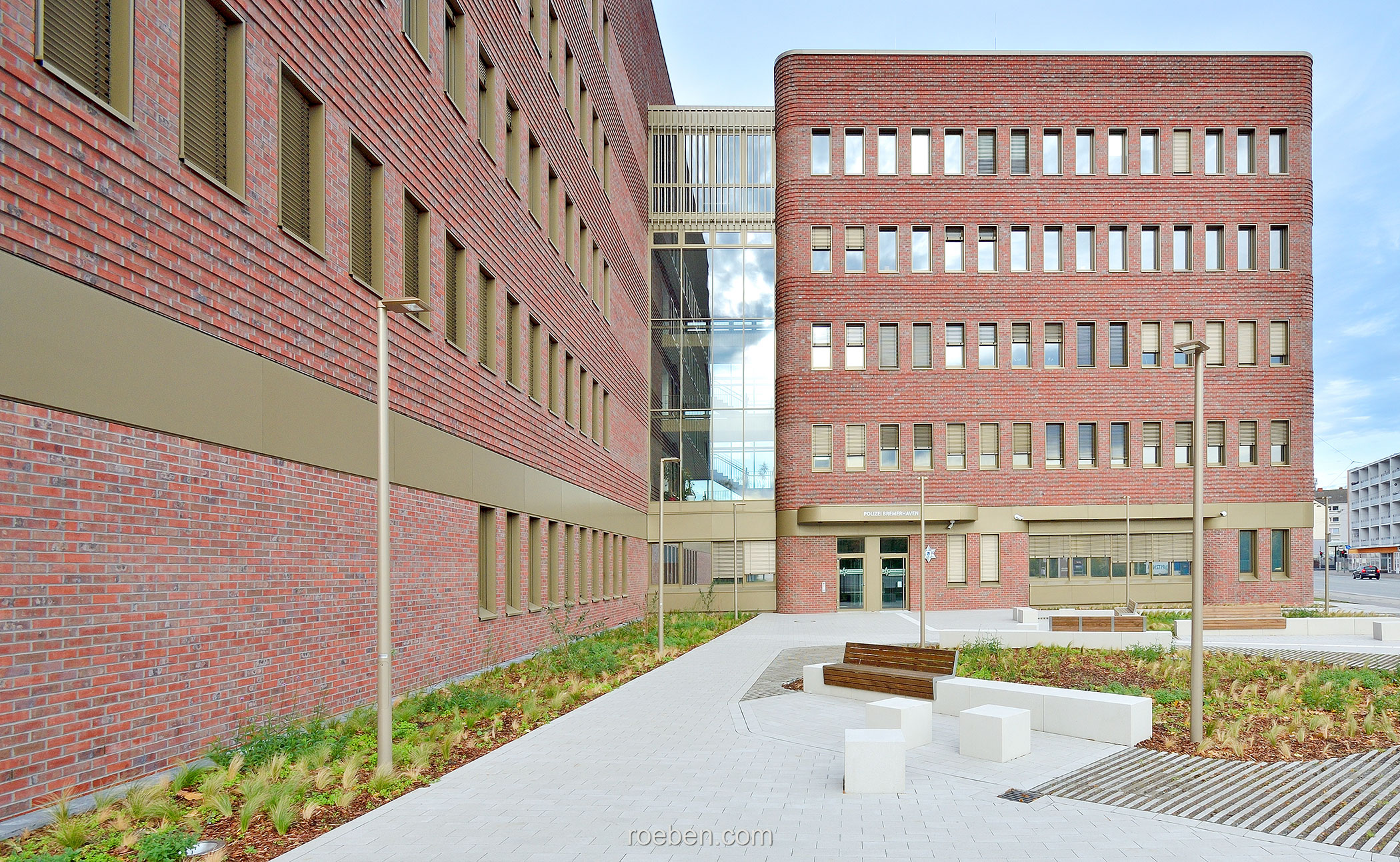
To accommodate the required spatial program, the designers developed a striking clinker-brick structure consisting of three volumes of varying heights. The three building sections are connected by a glass-enclosed stairwell and a glass passageway leading to the single-story section of the building.
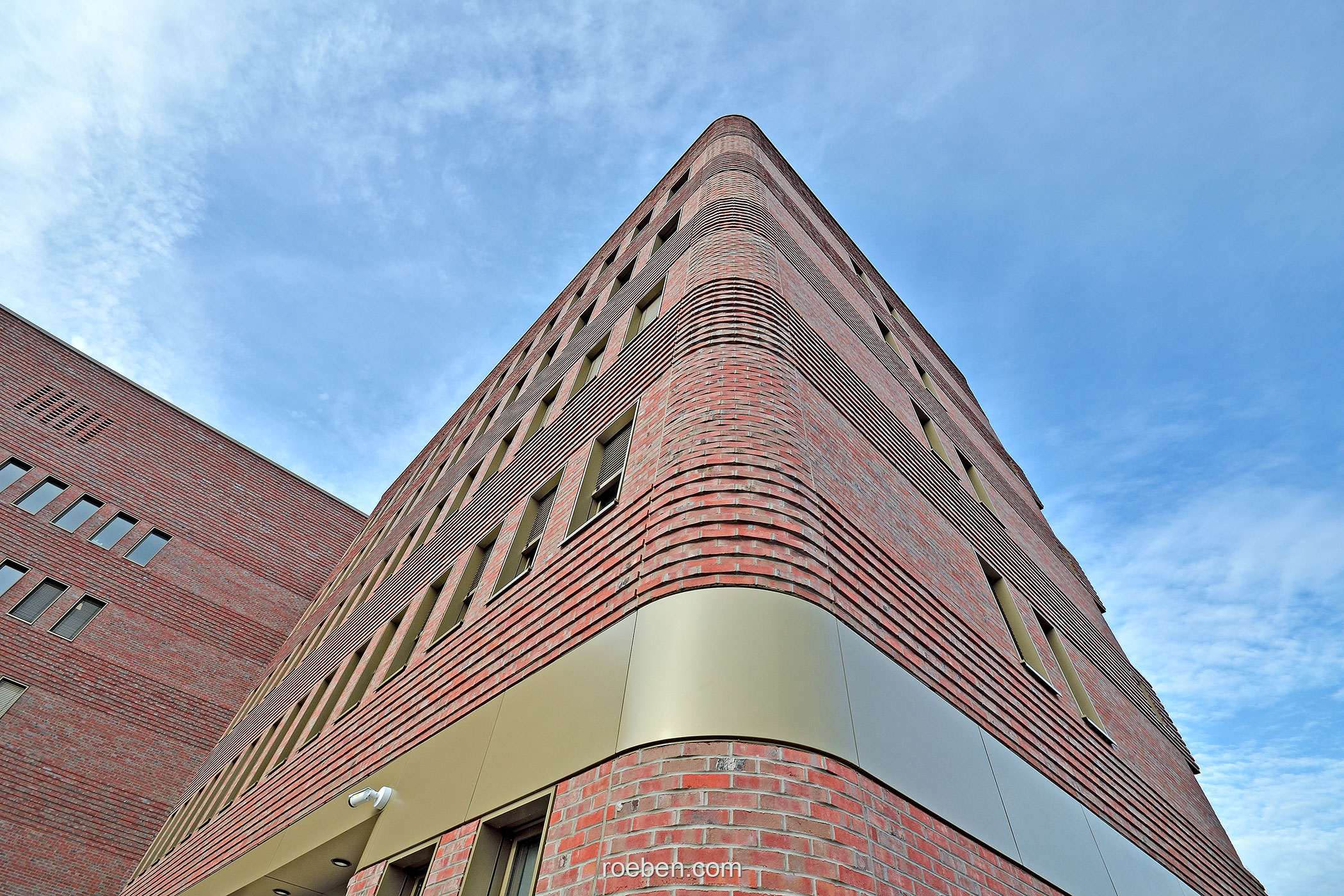
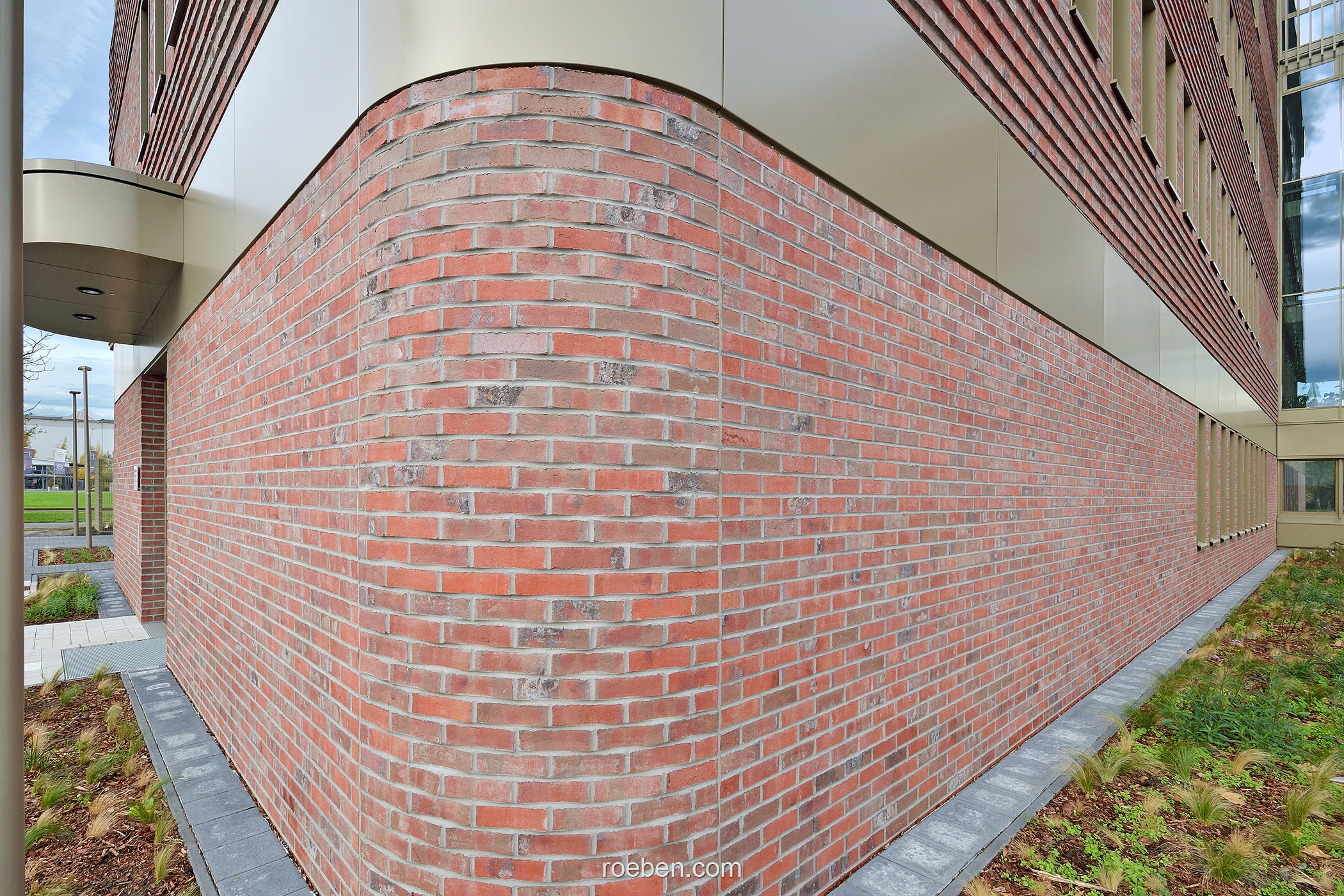
“The rounded corners of the building facing the street create a powerful, distinctive image from all perspectives, providing the desired introduction to the shipyard grounds behind it,” say the architects.
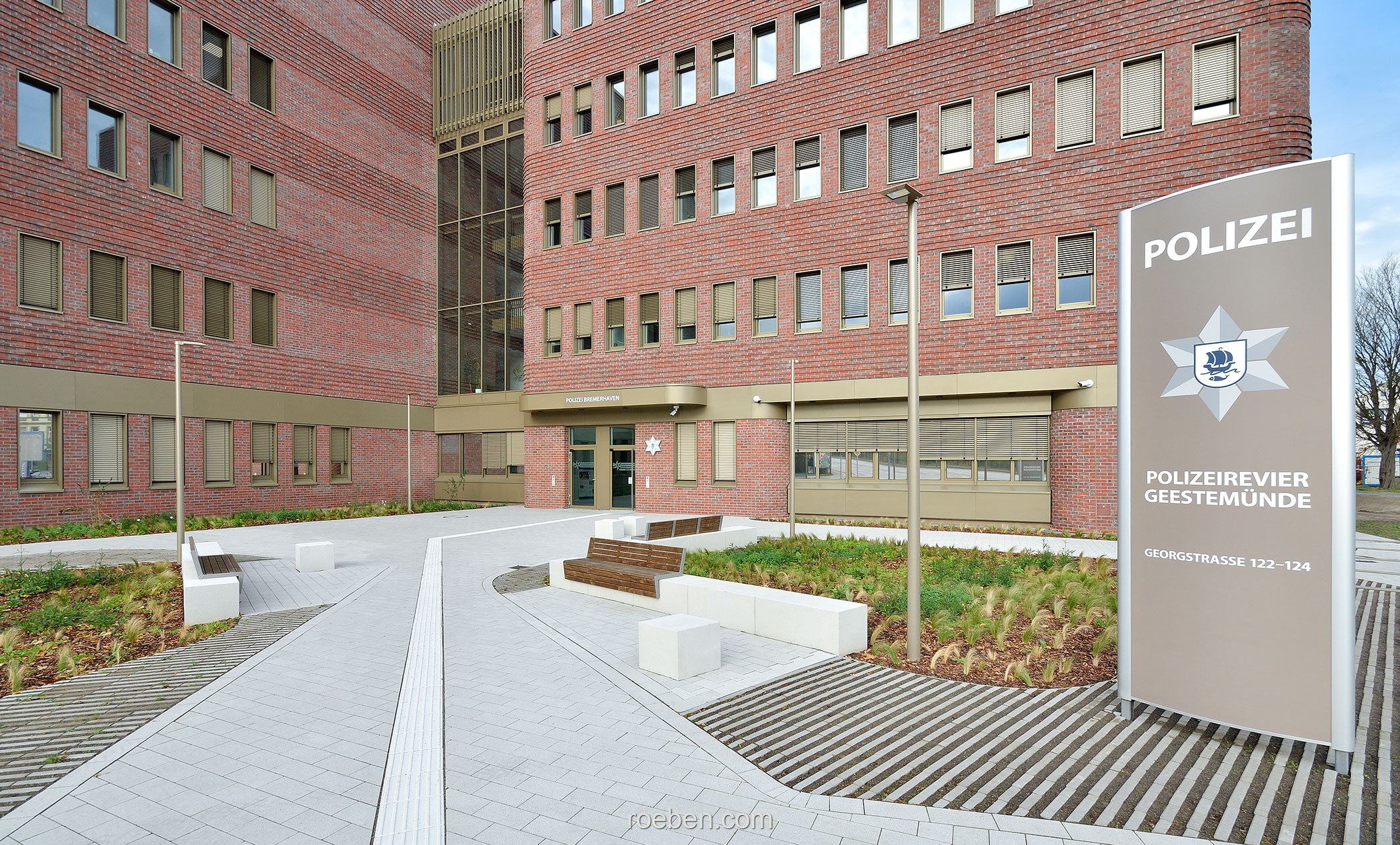
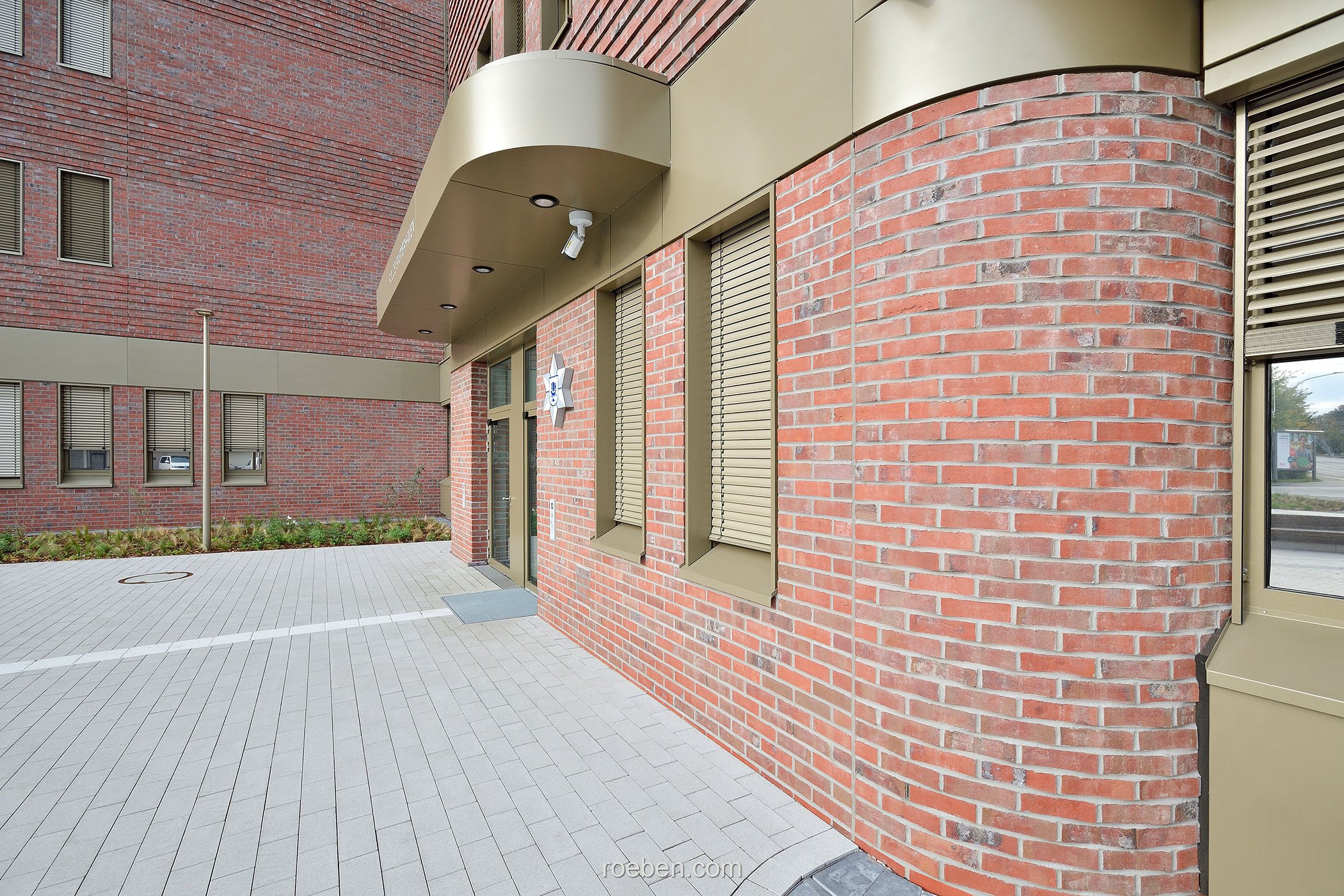
Another striking detail of the design is the horizontal, relief-formed clinker bands that run around the perimeter, giving the ensemble its dynamic form while also emphasizing its location at the busy intersection. The horizontal structure is further accentuated by the strictly symmetrically placed aluminum windows with bronze-colored frames, as well as a bronze-colored metal band that encircles the building elements and also forms the canopies that highlight the entrances.
Modern, Detailed Facade
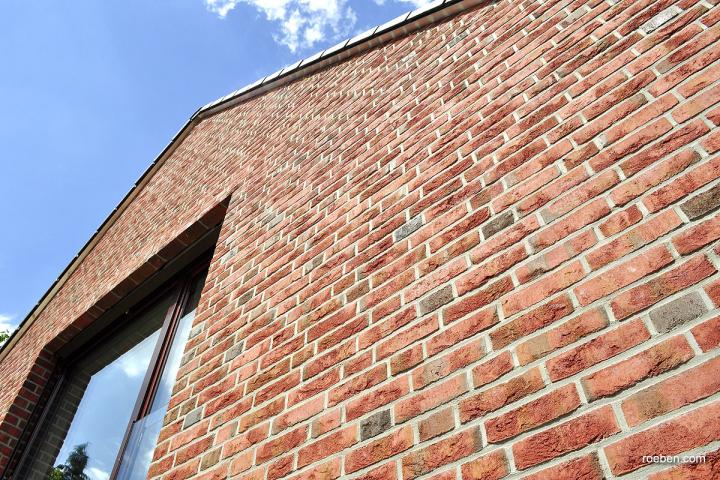
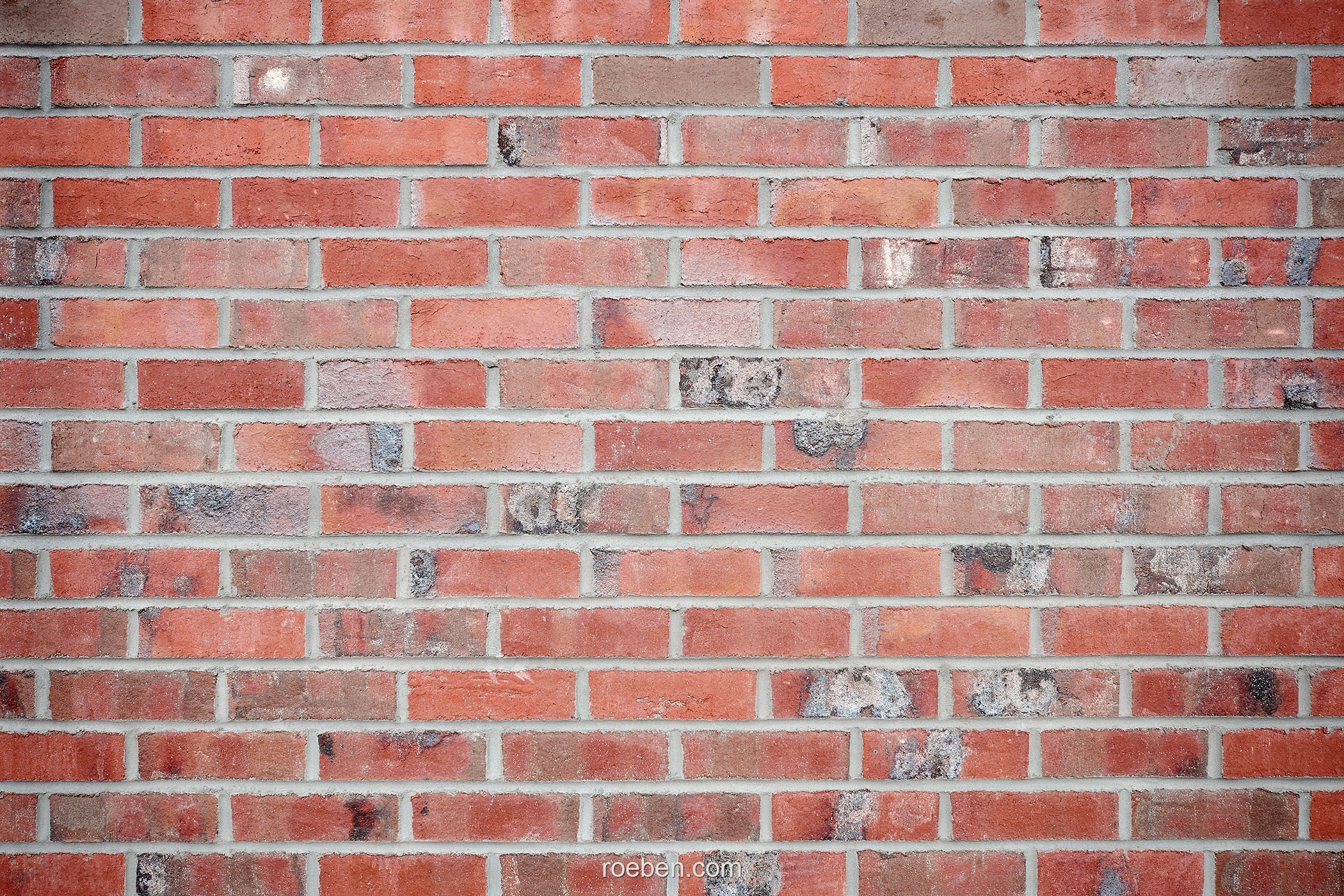
However, the new building’s style is defined above all by its powerfully designed clinker brick facade: “The material stands for durability, for material and surface quality with a long service life,” the architects explain. In addition, the building blends seamlessly into the existing clinker architecture of the port city of Bremerhaven. To meet the high standards required for the project’s implementation, the planners and general contractor, in close consultation with the client, selected the rustic Röben hand-molded facing brick WIESMOOR in a red-blue-multicolored pattern and standard size. The vibrantly colored bricks, laid in a sophisticated half-brick running bond, emphasize the architecture’s strong character while creating a beautiful contrast to the bronze-framed windows.
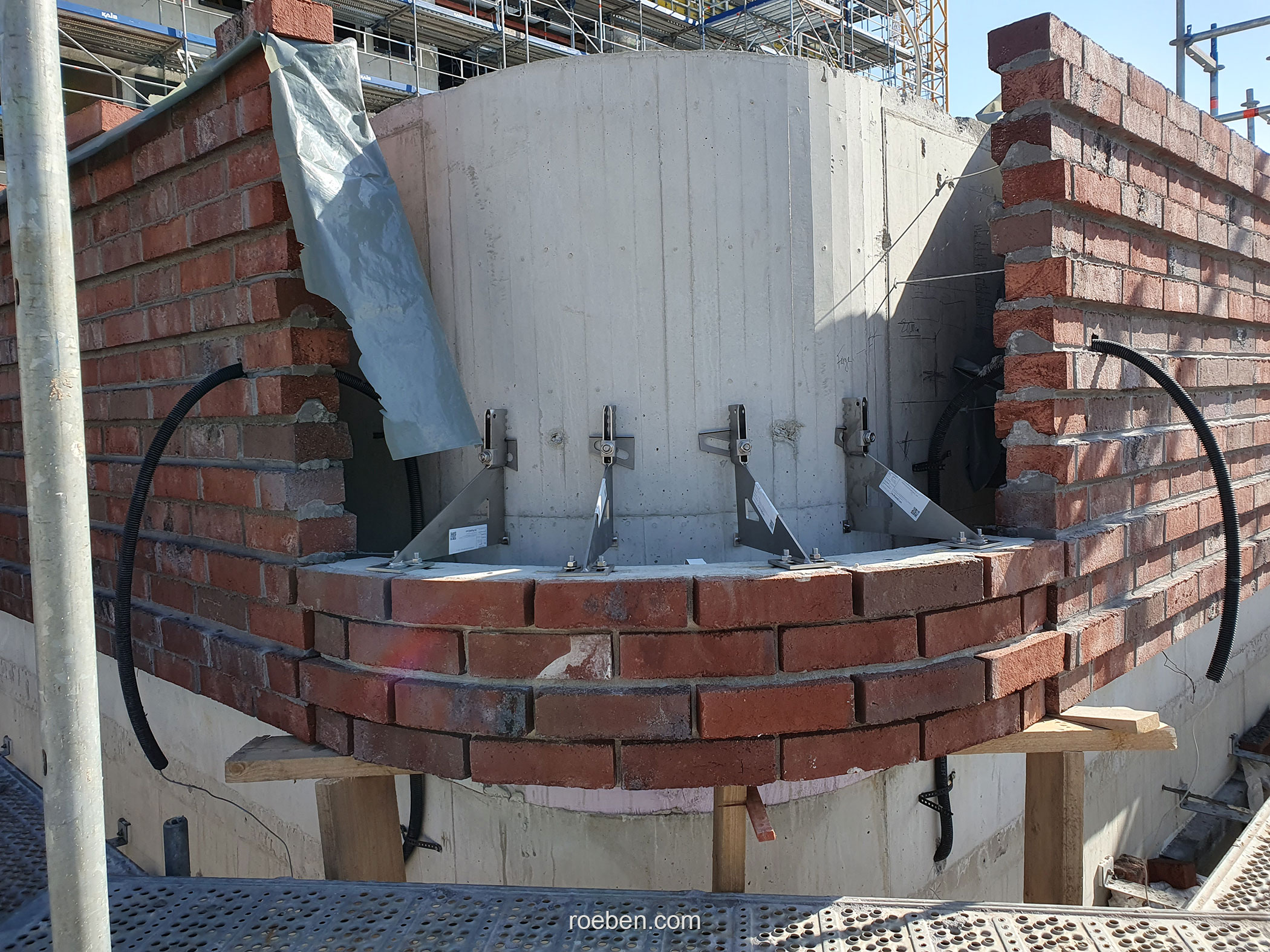
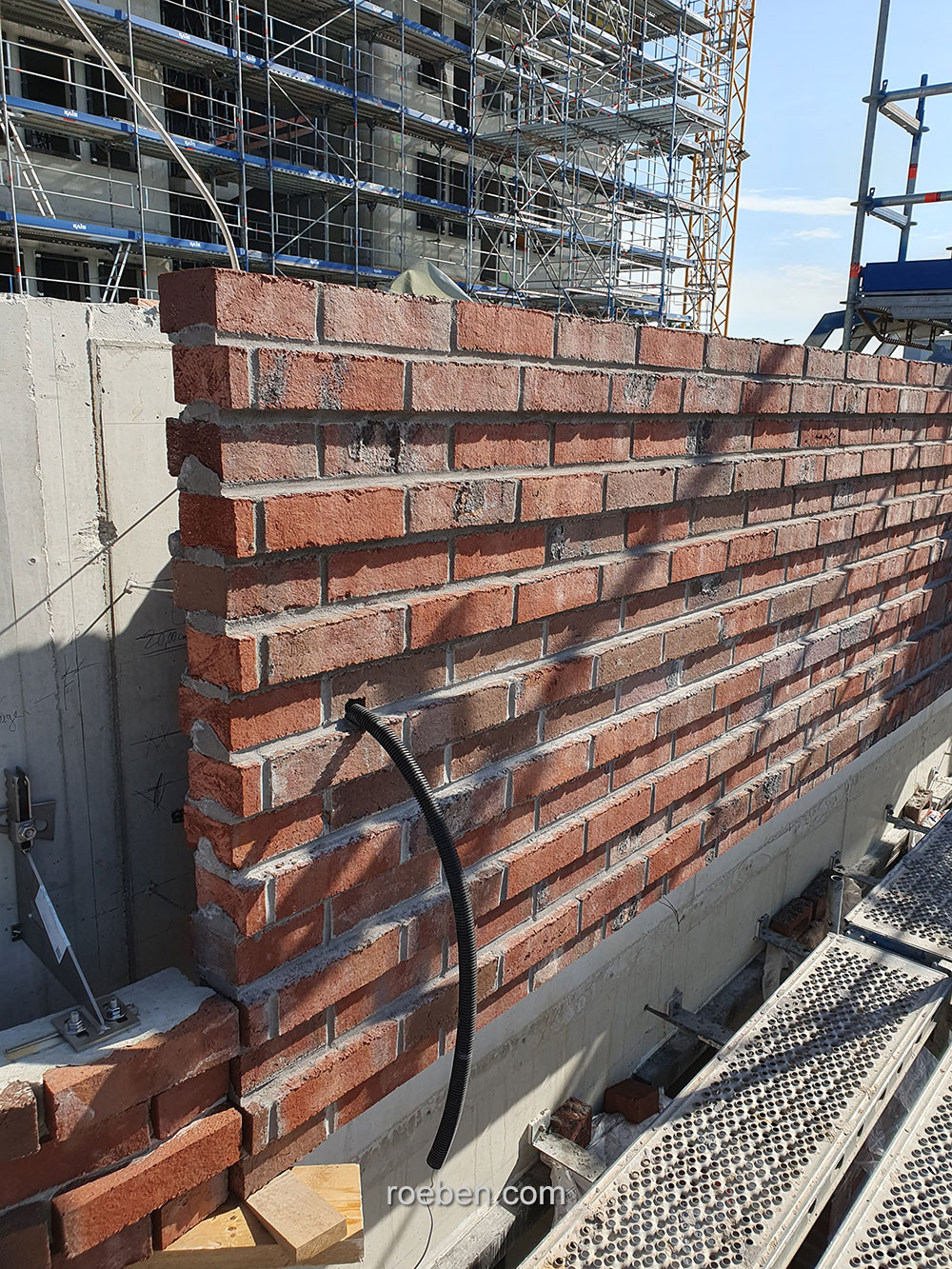
A particular challenge was the construction of the rounded and cantilevered building corners. Here, precast elements were used to support the conventionally built masonry above them, floor by floor. The clinker bands were already incorporated into the design; they appear in the continuous masonry every other row as clinkers protruding 25 millimeters. All window lintels, as well as the coverings for the exposed masonry openings in the interior, were also supplied as precast elements; this ensures that the powerful material effect of the robust clinker brick continues inside the building, thereby guaranteeing a consistent design language with a seamless transition. In total, Röben designed, manufactured, and delivered 364 precast brick elements to the construction site.
Successful Integration
The design is complemented by a small town square in front of the building, which serves as a gathering area for passersby. In addition, a carport facility is available for emergency vehicles. The flat roofs are extensively greened and equipped with a photovoltaic system; on the single-story section of the building, a green roof terrace offers additional open space. With its optimized insulation and the geothermal utilization of the subsoil via ground-source heat pumps for CO2-neutral heating, the new building is the first police station in Germany that can be operated entirely climate-neutrally using renewable energy.
Haslob Kruse + Partner
BREMEN
hkp-architekten.de